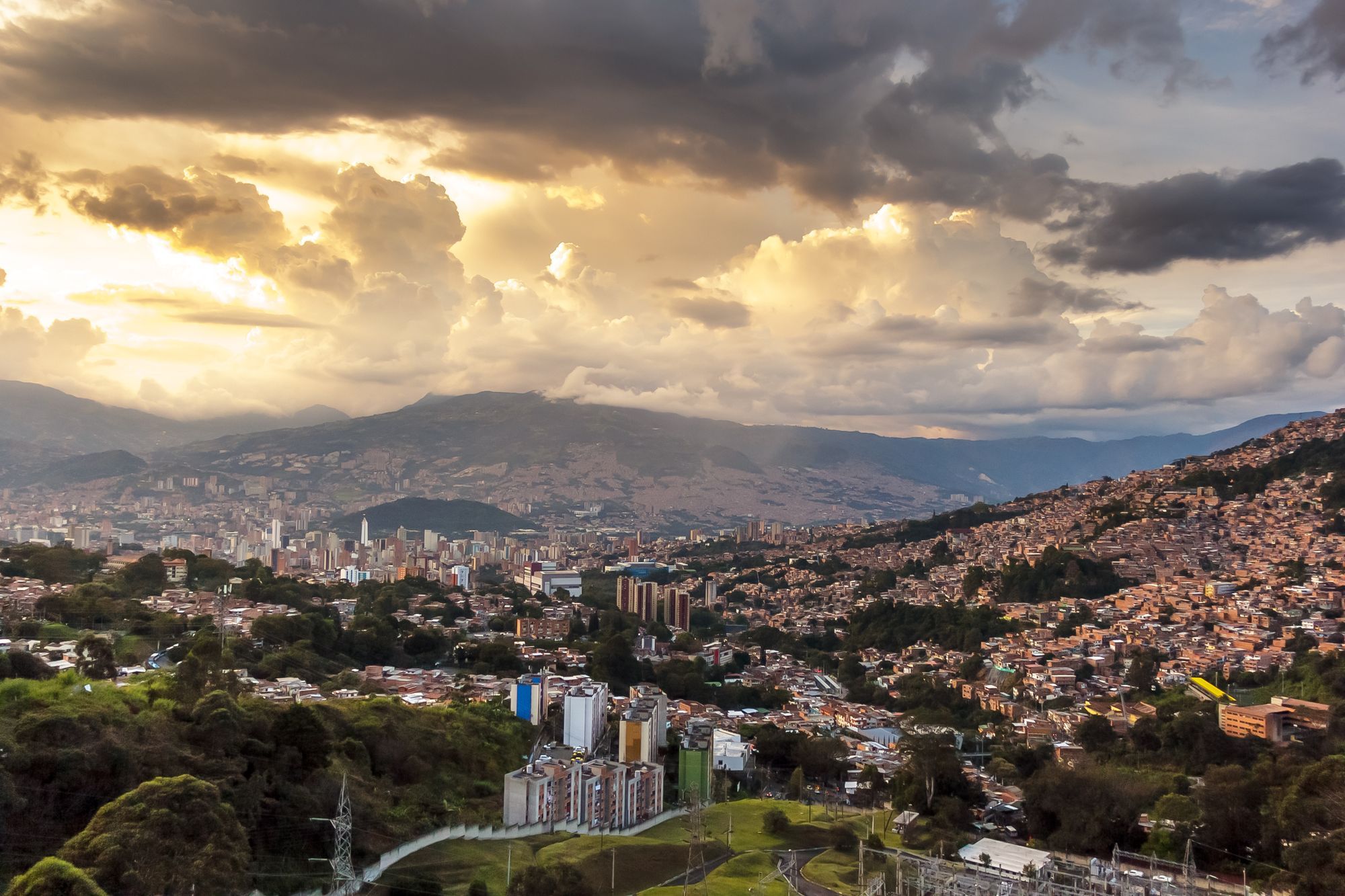
Medellín is a mountain-valley city in Colombia known for its mild climate, Metrocable cable cars and Comuna 13 street art. Backpacker hostels cluster in El Poblado (around Provenza and Parque Lleras) and in quieter Laureles.
Known for
Social, Party, Work-friendly, Adventure
Hostel areas
El Poblado (Provenza and Parque Lleras), Laureles, Envigado
You’ll complete your booking with Hostelworld. We may earn a commission from qualifying bookings.
Best areas to stay in Medellín for hostels
01
El Poblado (Provenza and Parque Lleras)
Best for: First-timers, nightlife and meeting people
El Poblado is Medellín’s main tourist district and where hostels are most concentrated. Provenza’s leafy streets are lined with bars, restaurants and cafés, and Parque Lleras is the heart of the weekend nightlife. Poblado Metro station on Line A sits at the bottom of the hill, so expect steep walks between the station and many hostels. Weekend nights can be loud close to the bars.
02
Laureles
Best for: A quieter, local feel
Laureles is a flat, residential neighbourhood west of the river, known for its circular streets, tree-lined avenues and neighbourhood cafés and restaurants. It is calmer than El Poblado but still has a bar strip along La 70 and the area around the Atanasio Girardot stadium. Estadio station on Metro Line B makes it simple to cross the city.
03
Envigado
Best for: Longer stays away from the crowds
Envigado is a separate municipality on El Poblado’s southern edge, with a traditional main square, local eateries and a slower pace. Colombia’s tourism site mentions it as a quieter option. It is connected to the rest of the valley by Metro Line A, which suits travellers staying a week or more who want everyday neighbourhood life rather than nightlife.
Live rooms and prices
Compare every hostel in Medellín
See live dorm beds, private rooms, prices and cancellation terms for your dates on Hostelworld.
You’ll complete your booking with Hostelworld. We may earn a commission from qualifying bookings. You’ll choose your dates and guests there.
Staying in Medellín
Medellín sits in the Aburrá Valley at roughly 1,500 metres, which gives it the nickname the City of Eternal Spring: Colombia’s official tourism site puts the average temperature at around 19°C year-round. For backpackers that means comfortable days for walking, rooftop evenings and little need for air conditioning, with the green slopes of the Andes visible from almost every street.
The city is easy to explore on public transport. The Metro’s two main lines run the length of the valley, and Metrocable gondolas climb to hillside neighbourhoods and on to Parque Arví, a large nature reserve above the city. Comuna 13, once among the city’s most troubled districts, now draws visitors to its murals, outdoor escalators, hip-hop performances and guided tours.
Most travellers base themselves in El Poblado, the main nightlife and tourist district, or Laureles, a more residential area of tree-lined streets and local cafés. Medellín also works well as a hub: day trips to the lakeside town of Guatapé and the coffee farms around Santa Elena are popular, and frequent domestic flights link the city to Cartagena and the Caribbean coast.
Metrocable rides to Parque Arví, day trips to Guatapé and hikes in the surrounding hills are all within easy reach.
Getting to Medellín
Most international flights land at José María Córdova International Airport (MDE) in Rionegro, in the hills east of the city. Airport buses and taxis run down to Medellín, and the drive usually takes around an hour depending on traffic and the route. Olaya Herrera Airport (EOH), inside the city, mainly handles regional flights. Long-distance buses use the North and South bus terminals. Once in the city, the Metro, Metrocable and tram are paid with a rechargeable Cívica card, and Poblado and Estadio stations serve the main hostel areas.
Best time to visit
Medellín is pleasant all year, with daytime temperatures typically in the high teens to high twenties Celsius. The drier spells generally run from December to March and from June to August, while April–May and October–November tend to bring more frequent afternoon rain. August is a busy month because of the Feria de las Flores, the city’s flower festival, and December fills up with holiday visitors and Christmas lights.
Hostel tips for Medellín
Decide between El Poblado for nightlife and Laureles for quiet before booking; they offer very different stays.
In El Poblado, check how steep the walk is from the hostel to Poblado Metro station, especially if you carry a heavy pack.
If you want sleep at weekends, avoid dorms facing streets near Parque Lleras and Provenza, or ask for a room at the back.
Air conditioning is rarely essential in this climate, so a hostel with good airflow or fans is usually enough.
Remote workers should ask about Wi-Fi speed and whether there is a quiet work area, as many hostels cater to longer stays.
Ask whether the hostel stores luggage, which is handy for overnight trips to Guatapé or the coast.
Medellín hostel FAQs
Which area of Medellín is best for hostels?
El Poblado, especially around Provenza and Parque Lleras, has the biggest concentration of backpacker hostels and is the city’s main nightlife area, so it suits first-time visitors who want to meet people. Laureles is the main alternative: a flatter, residential neighbourhood with local cafés, a calmer atmosphere and Metro access via Estadio station. Choose El Poblado for a social scene and Laureles for a quieter, more local stay.
Is El Poblado or Laureles better for backpackers?
It depends on what you want from your stay. El Poblado has the most hostels, the busiest bars and plenty of tours that start nearby, but it can be noisy at weekends and is hilly. Laureles is flat, quieter and more residential, with a bar strip along La 70 for evenings out. Both areas are on the Metro network, so it is easy to visit one while staying in the other.
How do I get from Medellín airport to El Poblado?
José María Córdova International Airport (MDE) is in Rionegro, east of Medellín, so the transfer goes over the mountains. Taxis and airport buses run to the city; the journey usually takes around an hour, depending on traffic. Airport buses stop in central Medellín, from where a short taxi or Metro ride on Line A to Poblado station reaches most hostels in El Poblado.
How many days should I spend in Medellín?
Many backpackers spend four to five days in Medellín. That allows a walking tour of the centre, a Comuna 13 tour, a Metrocable ride up to Parque Arví and a day trip to Guatapé, with time left for El Poblado’s cafés and nightlife. Remote workers and language learners often stay for weeks, helped by the mild climate and the many cafés in El Poblado and Laureles.
What is the weather like in Medellín?
Medellín sits at around 1,500 metres, so its climate is mild all year; Colombia’s official tourism site puts the average temperature at about 19°C, with typical ranges of roughly 18–28°C. Rain is common, especially in April–May and October–November, usually as afternoon showers. Light layers and a rain jacket cover most days, with sun protection advised even when it is cloudy.
How do I visit Comuna 13 from a hostel in Medellín?
Comuna 13 is on the western side of the city and is easiest to visit on a guided tour, which many hostels can arrange. Independent visitors usually take Metro Line B to San Javier station and continue by bus or taxi to the area with the outdoor escalators and murals. Check official travel advice and ask hostel staff for current guidance before you go.