Cartagena de Indias is a Caribbean port on Colombia’s north coast whose walled old town is a UNESCO World Heritage Site. Most backpacker hostels are in Getsemaní, just outside the walls, with others inside the walled city.
Known for
Social, Party, Relaxed
Hostel areas
Getsemaní, The walled city (Ciudad Amurallada), San Diego, Bocagrande
You’ll complete your booking with Hostelworld. We may earn a commission from qualifying bookings.
Best areas to stay in Cartagena for hostels
01
Getsemaní
Best for: Backpackers, nightlife and street art
Getsemaní sits just outside the walls and has the city’s main cluster of hostels. Its streets are covered in murals and hung with bunting, and Plaza de la Trinidad becomes a gathering place every evening with street food and music. Salsa bars and rooftop bars keep things lively late, especially at weekends. The walled city is a short walk away across Parque del Centenario.
02
The walled city (Ciudad Amurallada)
Best for: History and architecture on the doorstep
The UNESCO-listed walled city holds churches, plazas, the cathedral and the Clock Tower, and staying here puts you among colonial architecture from morning to night. Accommodation inside the walls leans towards boutique hotels, but there are hostels too, often in converted colonial houses with courtyards. It is busy with day visitors and cruise passengers, then calmer late at night.
03
San Diego
Best for: A quieter corner of the old town
San Diego is the northern part of the walled city, around Plaza de San Diego and Las Bóvedas, the old vaults in the walls now used as craft shops. It feels more residential than the area around the Clock Tower, with small restaurants and plazas that are pleasant in the evening, and it is within walking distance of the old-town sights and the sea walls.
04
Bocagrande
Best for: City beaches and high-rise hotels
Bocagrande is a peninsula of apartment towers, hotels, shopping centres and wide city beaches, described by Colombia’s official tourism site as Cartagena’s most touristy area. It has fewer hostels than Getsemaní and a more resort-like feel. A short taxi ride links it to the walled city, which suits travellers who want to be by the sea.
Live rooms and prices
Compare every hostel in Cartagena
See live dorm beds, private rooms, prices and cancellation terms for your dates on Hostelworld.
You’ll complete your booking with Hostelworld. We may earn a commission from qualifying bookings. You’ll choose your dates and guests there.
Staying in Cartagena
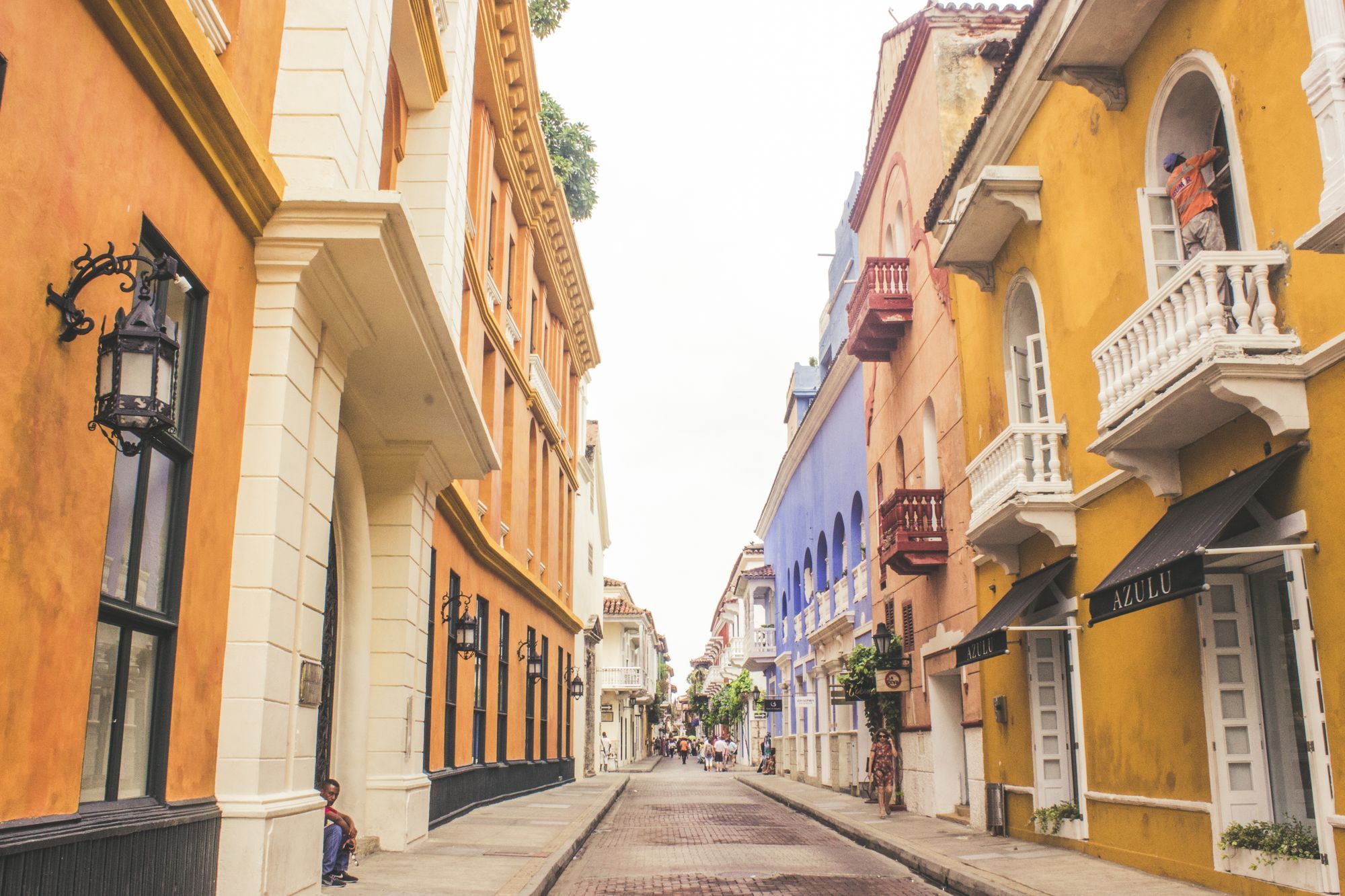
Cartagena de Indias is Colombia’s best-known colonial city, a Caribbean port whose historic centre is enclosed by kilometres of stone walls and was declared a UNESCO World Heritage Site in 1984. Inside the walls, balconied houses painted in bright colours line narrow streets that open onto plazas, churches and the Clock Tower gate, with the 17th-century Castillo de San Felipe de Barajas guarding the city from a hill just outside.
Getsemaní, the neighbourhood immediately beyond the walls, is where most backpackers stay. Once a working-class district of artisans and dock workers, it is now known for its murals, graffiti tours, street food and evenings in Plaza de la Trinidad, where families, street performers and travellers gather after dark. Despite its popularity, it keeps a strong local identity, with residents chatting on doorsteps and small corner shops alongside the cafés, rooftop bars and salsa clubs that draw visitors from across the city.
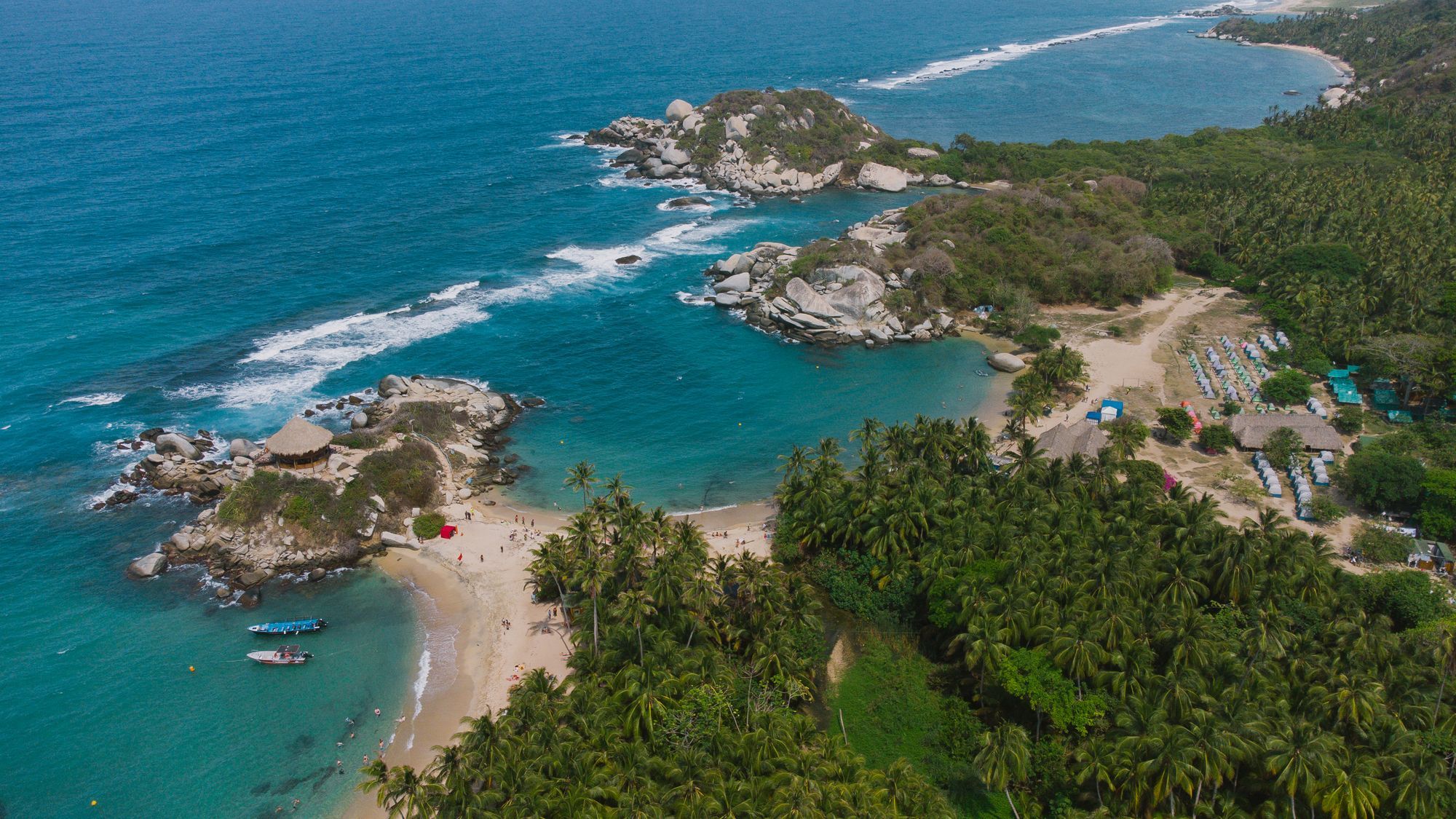
The city is hot and humid all year, averaging around 27°C, so the rhythm of a visit follows the heat: early-morning walks, afternoons by a pool or on a boat, and late nights. Boats leave the city for the Rosario Islands and Barú, part of a group of island complexes with more than 20 beaches, according to Colombia’s official tourism site. Many travellers then continue along the coast towards Santa Marta and Tayrona National Park.
Boat trips to the Rosario Islands and Barú offer Caribbean beaches and slow days on the water.
Getting to Cartagena
Rafael Núñez International Airport (CTG) is in the Crespo district, a few kilometres north-east of the walled city, and a taxi to Getsemaní typically takes around 15–20 minutes. It has direct international flights as well as frequent domestic connections from Bogotá and Medellín. Long-distance buses arrive at the main bus terminal on the city’s outskirts, about 45 minutes or more from the centre by taxi or local bus. Shuttle buses connect Cartagena with Santa Marta and other Caribbean coast towns. Getsemaní and the walled city are compact enough to explore on foot.
Best time to visit
Cartagena is hot year-round, averaging around 27°C with high humidity. Colombia’s official tourism site recommends late November to late April, when it is drier and sea breezes make the heat more bearable. The rest of the year brings more rain, usually as heavy afternoon downpours, and October is generally the wettest month. Late December, January and Colombian holiday weekends are the busiest periods; January also brings the Cartagena Music Festival and the Hay Festival.
Hostel tips for Cartagena
Air conditioning matters in Cartagena’s heat and humidity; check whether it is in every dorm and at what hours it runs.
A rooftop terrace or small pool, common in Getsemaní hostels, makes the hottest part of the afternoon far easier.
Book well ahead for late December, January and Colombian holiday weekends, when the city is at its busiest.
For Rosario Islands trips, Corpoturismo lists authorised boat operators; ask whether the hostel’s tours use one of them.
Rooms facing Getsemaní’s lively streets can be loud late into the night, so ask for an inner room if you sleep lightly.
Ask about luggage storage if you plan overnight island trips or a run up the coast to Santa Marta.
Cartagena hostel FAQs
Is Getsemaní a good area for hostels in Cartagena?
Yes, Getsemaní is the main hostel area in Cartagena. It sits just outside the walled city, a short walk from the old-town sights, and is known for its murals, street food and evening atmosphere in Plaza de la Trinidad. Its bars and salsa clubs make it lively at night, so light sleepers may prefer a room away from the busiest streets or a stay in the quieter San Diego area.
Should I stay in Getsemaní or inside the walled city?
Getsemaní has more hostels, a stronger backpacker scene and a more local, street-level atmosphere, with nightlife on the doorstep. The walled city puts you among the colonial architecture and plazas, but accommodation there leans towards boutique hotels. The two areas are a few minutes’ walk apart, so either base gives easy access to the other.
How far is Cartagena airport from Getsemaní?
Rafael Núñez International Airport (CTG) is only a few kilometres north-east of the old town, in the Crespo district. A taxi to Getsemaní or the walled city typically takes around 15–20 minutes, depending on traffic. That short transfer makes early-morning flights and late arrivals easier than in many Colombian cities.
When is the best time to visit Cartagena?
Colombia’s official tourism site recommends late November to late April, when the weather is drier and sea breezes ease the heat. Cartagena is hot all year, around 27°C on average, so there is no cold season. From May to November rain is more frequent, with October usually the wettest month. Late December and January are the busiest, so book accommodation early for that period.
How many days do you need in Cartagena?
Three to four days covers the walled city, Getsemaní, the Castillo de San Felipe and an evening or two of nightlife. Colombia’s official tourism site suggests five to six days if you want to add a stay on the Rosario Islands or Barú. Many backpackers then continue along the Caribbean coast to Santa Marta and Tayrona National Park.
How do I get from Medellín to Cartagena?
Flying is the quickest option: frequent domestic flights connect Medellín’s José María Córdova airport (MDE) with Cartagena’s Rafael Núñez airport (CTG), with a flight time of roughly an hour to an hour and a half. Overnight and daytime buses also run between the two cities, but the road journey is long, typically well over 12 hours.