Bogotá is Colombia's capital, set high in the Andes at around 2,600 metres. Hostels cluster in the colonial centre of La Candelaria and in the livelier, more modern district of Chapinero.
Known for
Social, Adventure
Hostel areas
La Candelaria, Chapinero, Zona T and the Zona Rosa, Usaquén
You’ll complete your booking with Hostelworld. We may earn a commission from qualifying bookings.
Best areas to stay in Bogotá for hostels
01
La Candelaria
Best for: First-timers who want to walk to the sights
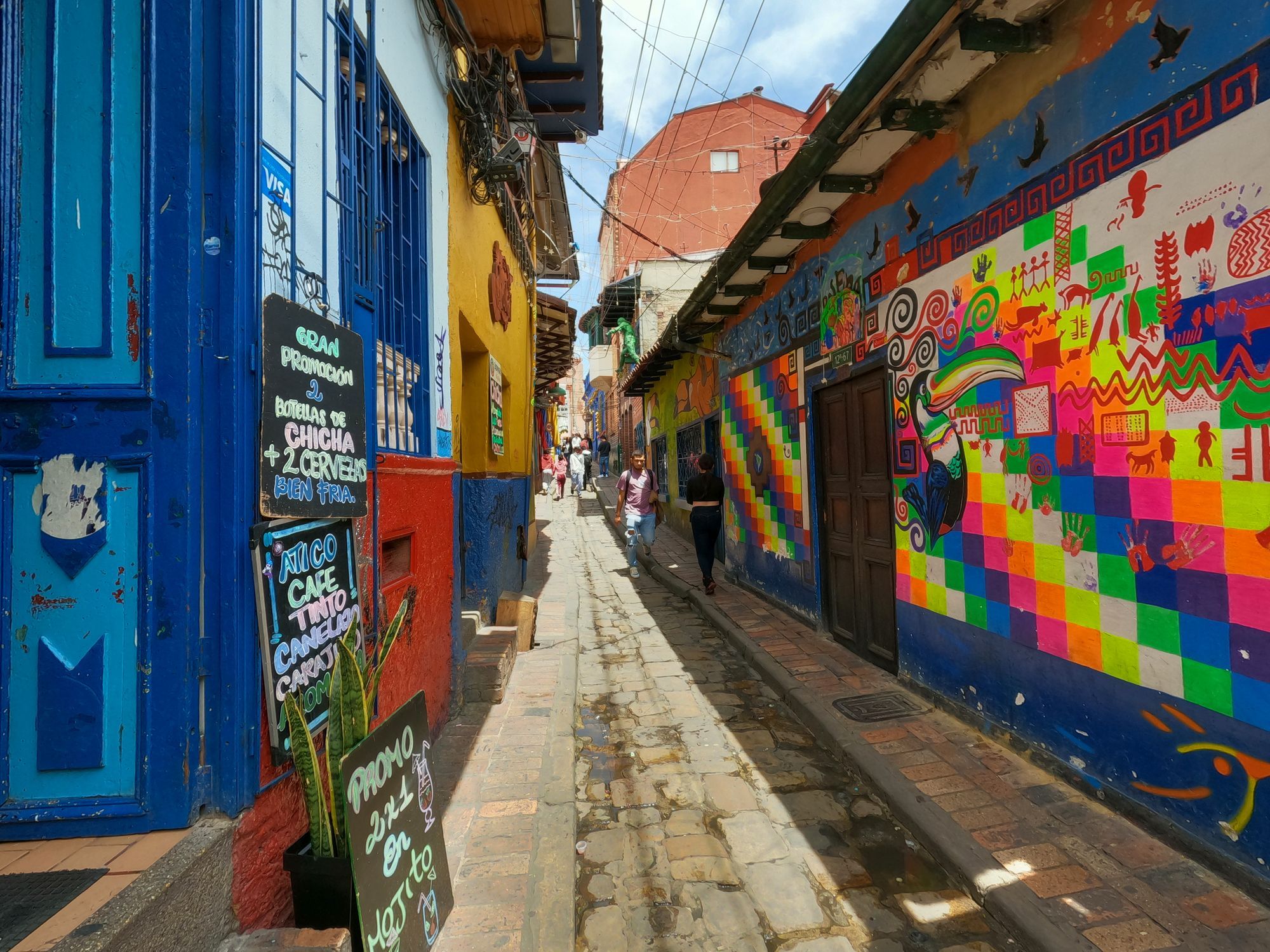
The historic centre, with colonial buildings, museums, murals and the Chorro de Quevedo plaza. Many main sights, including the Gold Museum, are within walking distance. Streets quieten noticeably at night, so travellers usually take a registered taxi or ride-hail after dark rather than walking long distances. Check the latest local advice and ask your hostel which routes people use in the evening.
02
Chapinero
Best for: Cafés, restaurants and a modern city feel
A large district north of the centre with a mix of residential streets, cafés, restaurants, bars and nightlife. It is well placed for a longer stay or for travellers who prefer a less touristy base than the old town. Distances to the historic centre are significant, so check how long the journey will take by TransMilenio bus rapid transit or taxi.
03
Zona T and the Zona Rosa
Best for: Nightlife and dining
A pedestrianised dining and nightlife area within Chapinero, filled with restaurants, bars and clubs. It suits travellers who want evenings out close to where they sleep. It is a long way from La Candelaria, so plan your daytime sightseeing around transport. Noise from nearby venues can carry late at night, so check which side of the building the dorms face.
04
Usaquén
Best for: A calmer, village-style base in the north
A former village now absorbed into northern Bogotá, with a colonial-style main square, cafés and a Sunday market. It is quieter than the centre, but a long way from La Candelaria and the Gold Museum. It suits travellers who want a relaxed pace and are happy to use taxis or TransMilenio to reach the main sights.
Live rooms and prices
Compare every hostel in Bogotá
See live dorm beds, private rooms, prices and cancellation terms for your dates on Hostelworld.
You’ll complete your booking with Hostelworld. We may earn a commission from qualifying bookings. You’ll choose your dates and guests there.
Staying in Bogotá
Bogotá sits on a high Andean plateau, and the altitude is the first thing many arrivals notice. Colombia's official tourism site gives the elevation as 2,600 metres above sea level and suggests staying hydrated, eating well and resting to adjust. Days are typically mild, nights cool, and rain can arrive at any time of year, so a light waterproof is worth packing.
The historic heart of the city is La Candelaria, a grid of colonial houses, plazas, museums and street art beneath the eastern hills. The Gold Museum holds a significant collection of pre-Hispanic objects, and the sanctuary of Monserrate on the hillside above the centre is one of the best-known landmarks. Chapinero, further north, has a more contemporary feel, with restaurants, bars, cafés and nightlife.
Distances are large and traffic can be heavy, so the area you choose shapes your stay. Many backpackers use Bogotá as an entry or exit point for Colombia, then fly or take long bus journeys on to the coast, the coffee region or Medellín. A few nights is enough for the main sights, and a longer stay suits those who want to explore day trips from the city.
Bogotá is a starting point for hikes in the eastern hills and trips to Monserrate, which sits on the hills above the city.
Getting to Bogotá
Most international and domestic flights arrive at El Dorado International Airport (BOG), on the western side of the city. Travellers typically reach hostels by taxi or ride-hail, and journeys to La Candelaria or Chapinero can take anywhere from around 30 minutes to over an hour depending on traffic. Public buses link the airport to the centre. Long-distance buses use the main bus terminals, with services to cities such as Medellín, Armenia (for Salento) and the Caribbean coast taking many hours. For the coast, many travellers fly instead.
Best time to visit
Bogotá has no hot season, and temperatures stay mild all year, ranging from around 8 to 20°C according to Colombia's tourism site. The driest periods are typically December to January and June to September, though showers are common at any time. Colombia Travel recommends carrying an umbrella. Sources and years differ on the exact timing of the wetter months, so check a recent forecast before you travel.
Hostel tips for Bogotá
Allow a day or so to adjust to the altitude of around 2,600 metres, and drink plenty of water.
Bring layers: evenings are cool and not all dorms are heated, so ask whether blankets are provided.
Choose your area by what you plan to do: La Candelaria for walking to sights, Chapinero or Zona T for nightlife and restaurants.
Ask your hostel which taxi or ride-hail options they recommend for evenings and airport runs.
Keep valuables in a locker and use a padlock; ask what time reception and the common areas are staffed.
Check the latest FCDO travel advice for Colombia before you travel, and read current guest comments about the hostel's surroundings.
Bogotá hostel FAQs
Where should I stay in Bogotá as a backpacker?
Most backpackers choose La Candelaria or Chapinero. La Candelaria is the historic centre, within walking distance of museums such as the Gold Museum and the plazas. Chapinero is further north, with more restaurants, cafés and nightlife. Zona T and Usaquén are other options in the north. Pick based on whether you value sightseeing on foot or evenings out, and check journey times to the places you plan to visit.
How high is Bogotá and will I feel the altitude?
Colombia's official tourism site gives the elevation as 2,600 metres above sea level. Some travellers notice the altitude on arrival, for example with breathlessness when climbing stairs, and the site advises staying hydrated, eating well and resting to adjust. If you are concerned about how altitude may affect you, seek advice from a qualified health professional before travelling rather than relying on general guidance.
How do I get from El Dorado Airport to La Candelaria?
El Dorado International Airport (BOG) is on the western side of Bogotá. Most travellers take a taxi or ride-hail to La Candelaria, which typically takes around 30 to 60 minutes or longer depending on traffic. Public buses also connect the airport to the centre and may be cheaper but slower with luggage. Ask your hostel for current advice on the best option, especially if you land late at night.
What is the weather like in Bogotá?
Bogotá is cool and mild all year because of its altitude. Colombia's tourism site gives a yearly range of about 8 to 20°C, with daytime averages around 19°C. Rain is frequent, so carry an umbrella and a light waterproof. The driest periods are typically December to January and June to September, though showers can happen at any time.
How many days do I need in Bogotá?
Two to four days is a common stay for backpackers. That is enough to explore La Candelaria on foot, visit the Gold Museum, ride up to Monserrate and try a few different neighbourhoods. A longer stay suits travellers who want day trips from the city or want to adjust to the altitude gently before heading to higher or hotter parts of Colombia.