La Paz is Bolivia's seat of government, set in a steep canyon high in the Andes. Hostels cluster around the Sagárnaga and Linares markets, the central Prado area and Sopocachi.
Known for
Social, Adventure
Hostel areas
Calle Sagárnaga and the Linares markets, Prado and the city centre, Sopocachi
You’ll complete your booking with Hostelworld. We may earn a commission from qualifying bookings.
Best areas to stay in La Paz for hostels
01
Calle Sagárnaga and the Linares markets
Best for: Meeting travellers and walking to the sights
A steep tangle of lanes above Calle Illampu where tour agencies, alpaca-wool shops and the Witches' Market sit side by side. Many hostels occupy older buildings here. It is lively by day and quieter after dark. Expect hills and stairs, so a lighter bag helps, and take care with valuables on crowded streets.
02
Prado and the city centre
Best for: Flat walking and easy transport
The main avenue, El Prado, follows the valley floor and is one of the flatter parts of La Paz. Plaza Murillo, the government buildings and the San Francisco church are within walking distance. Minibuses, radio taxis and Mi Teleférico connections are easy to find. Good for those who want less climbing.
03
Sopocachi
Best for: Cafés, restaurants and a calmer pace
A residential district below the centre with tree-lined streets, galleries, viewpoints and many restaurants and bars. Some hostels sit here for a quieter stay. The UK government notes express kidnapping incidents near the Cementerio General and Sopocachi, so read its advice and use radio taxis at night.
Live rooms and prices
Compare every hostel in La Paz
See live dorm beds, private rooms, prices and cancellation terms for your dates on Hostelworld.
You’ll complete your booking with Hostelworld. We may earn a commission from qualifying bookings. You’ll choose your dates and guests there.
Staying in La Paz
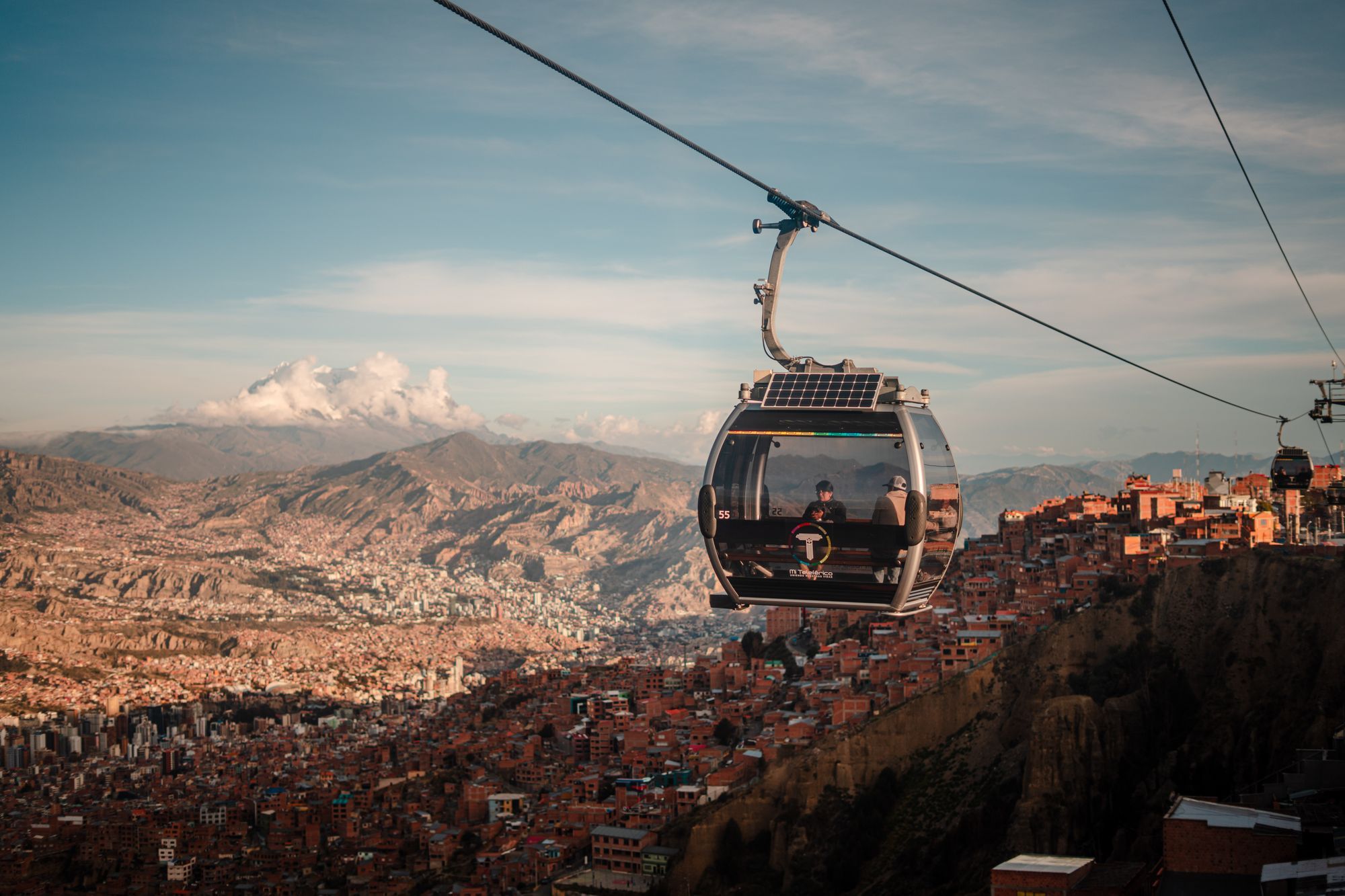
La Paz sits in a deep canyon on the Altiplano, with the city climbing the walls towards El Alto above. At around 3,600 metres it is one of the highest major cities in the world, and the snowcapped peak of Illimani watches over it on clear days. Streets are steep, markets spill onto the pavements, and the pace of the first day is often slow while your body adjusts.
For backpackers the city works as a base and a crossroads. Routes arrive from Peru across Lake Titicaca, head south towards Uyuni and Sucre, or drop down towards the Amazon basin and the Yungas valleys. The Mi Teleférico cable-car network links La Paz with El Alto and gives a quick, scenic way across the canyon. Day trips to Tiwanaku and the Valle de la Luna are common.
Hostels range from converted colonial houses near the Witches' Market to quieter places in Sopocachi with cafés and viewpoints nearby. Altitude affects sleep and energy, so many travellers build in a gentle first day. The UK government notes that altitude sickness is a risk in La Paz, and its travel advice also covers petty crime, taxis and protests that can disrupt roads.
La Paz is a common starting point for mountain, Yungas and Altiplano trips, and the UK government names altitude as a risk for visitors to the city.
Getting to La Paz
Most visitors fly into El Alto International Airport (LPB), which sits above the city, and reach the centre by taxi or radio taxi in around 30 to 45 minutes depending on traffic. The main bus terminal near Plaza Antofagasta handles long-distance services from Copacabana, Oruro, Sucre, Potosí and Uyuni, with routes to Peru and Chile leaving from La Paz and nearby points. Journeys by road are slow, and protests or roadblocks can add delays, so check the Bolivian road authority status map and the UK government advice before long trips.
Best time to visit
The dry season from May to October brings clear skies, sunny days and very cold nights, with the clearest mountain views. The wetter period runs roughly from November to March, with afternoon rain that can disrupt roads in the Yungas. Daytime temperatures are cool all year because of the altitude. June and July nights can fall below freezing, so pack warm layers whenever you go.
Hostel tips for La Paz
Give yourself a slow first day for altitude, and check the UK government and TravelHealthPro advice before you travel.
Check how steep the walk is from the nearest street, as many hostels sit on hillsides and stairs add up with a full pack.
Ask whether hot water and heating are provided in dorms, as nights are cold and not every building is heated.
Use a hostel-arranged radio taxi after dark rather than hailing one, in line with the UK government advice.
Ask about luggage storage if you plan multi-day trips to Uyuni, Rurrenabaque or the Yungas and return to La Paz.
La Paz hostel FAQs
Where should I stay in La Paz as a backpacker?
Hostels cluster in three main areas. The Sagárnaga and Linares streets are the classic traveller base, close to tour agencies and markets, but steep. The Prado and city centre are flatter and well connected for transport. Sopocachi is quieter, with cafés and restaurants. Pick the area that suits your energy at altitude and how much you want to walk uphill.
How do I get from El Alto Airport to central La Paz?
El Alto International Airport (LPB) is on the plateau above the city. Most travellers take a taxi or a pre-arranged radio taxi down to the centre, which typically takes around 30 to 45 minutes depending on traffic. Many hostels can arrange a pick-up. Avoid boarding a taxi that already has other passengers, as the UK government advises, and agree the pick-up point before you travel.
How high is La Paz and will I get altitude sickness?
La Paz sits at roughly 3,600 metres, and the UK government names altitude sickness as a risk in the city. Reactions vary from person to person and are hard to predict. Many travellers take it easy for the first day, drink water and avoid heavy exercise. The FCDO links to TravelHealthPro for detailed guidance, and a doctor or travel clinic can advise before you go.
Are protests and roadblocks likely to affect my trip?
They can. The UK government reports that protests and blockades can start with little notice and may affect roads, including routes to airports, and that a State of Emergency has been used to restrict them. Allow extra time for journeys, do not try to cross blockades and check the Bolivian road authority status map. Your hostel can usually tell you about local conditions.
How many days should I spend in La Paz?
Many travellers spend three to four days in La Paz. That leaves time to adjust to the altitude, ride Mi Teleférico, explore the markets and plaza areas, and take a day trip to Tiwanaku or the Valle de la Luna. Those heading on a multi-day salt flat tour or into the Yungas often return to La Paz afterwards, so a second stay is common.