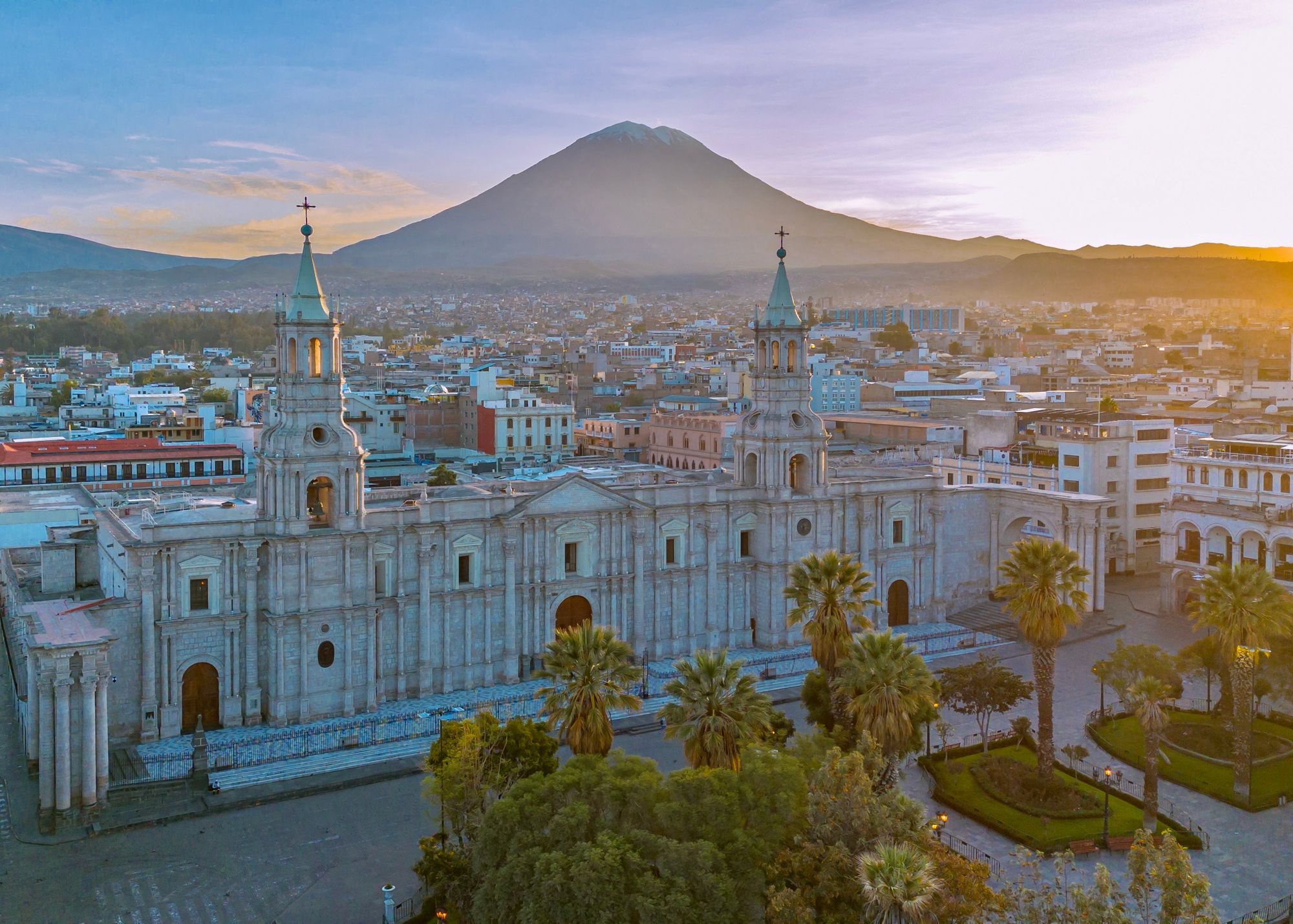
Arequipa is southern Peru's second city, set beneath the Misti volcano at roughly 2,300 metres. Hostels cluster around the Plaza de Armas and nearby San Lázaro, and most travellers use the city as a base for Colca Canyon.
Known for
Adventure, Relaxed
Hostel areas
Historic centre and Plaza de Armas, San Lázaro, Yanahuara
You’ll complete your booking with Hostelworld. We may earn a commission from qualifying bookings.
Best areas to stay in Arequipa for hostels
01
Historic centre and Plaza de Armas
Best for: Walking everywhere and early tour pick-ups
The colonial core around the Plaza de Armas has the cathedral, arcaded streets, restaurants and many tour agencies. Most travellers stay here because tour minibuses for Colca Canyon and volcano treks usually collect from central addresses. Evenings can be lively around the plaza, so ask about noise if you are a light sleeper.
02
San Lázaro
Best for: Quieter streets close to the centre
A traditional district of narrow lanes just north of the Plaza de Armas, within a short walk of the main sights. It tends to be calmer at night than the plaza itself while keeping restaurants and cafés close. Streets are steep and cobbled in places, which is worth bearing in mind with heavy luggage.
03
Yanahuara
Best for: Views of Misti and a residential feel
A residential district across the Chili River, known for its viewpoint with arches facing Misti and the city. It is a short taxi ride or a longer walk from the centre. Facilities are more limited than in the historic centre, so it suits a slower stay rather than quick tour logistics.
Live rooms and prices
Compare every hostel in Arequipa
See live dorm beds, private rooms, prices and cancellation terms for your dates on Hostelworld.
You’ll complete your booking with Hostelworld. We may earn a commission from qualifying bookings. You’ll choose your dates and guests there.
Staying in Arequipa
Arequipa sits in the dry highlands of southern Peru, watched over by the cone of Misti, with Chachani and Pichu Pichu close by. The Peruvian tourism board describes Misti as the city's iconic volcano, visible from lookouts such as Yanahuara. The old centre is built largely from pale volcanic stone, which is why Arequipa is often called the white city.
Backpackers tend to arrive from Cusco, Lima or Puno and stay a few nights. The city is a convenient launch point for Colca Canyon, a deep valley a few hours away that is known for condor-watching and trekking, and for volcano hikes in the surrounding mountains. Many tours leave early in the morning, so hostels near the centre often hold luggage for travellers heading out on multi-day trips.
Arequipa lies at around 2,300 metres above sea level, which is lower than Cusco but high enough that some people notice the altitude on arrival. The UK government's travel advice flags altitude sickness as a risk in parts of Peru, including the Colca Canyon, so it is worth reading before you plan treks. Daytime sun is strong and evenings can be cool.
Peru.travel lists trekking, rafting and horse riding in Colca Canyon and mountain-biking routes on Chachani and Pichu Pichu, all reached from the city.
The historic centre is compact and walkable, with courtyards, viewpoints such as Yanahuara and a slower pace than Cusco or Lima.
Getting to Arequipa
Arequipa's airport (AQP) has domestic flights, including to Lima, which Peru.travel puts at about 1 hour 15 minutes by air. The main bus terminals are on the southern side of the city, with long-distance coaches from Lima (around 16 hours overland, according to Peru.travel), Cusco, Puno and Nazca. Taxis and ride-hail apps connect the airport and terminals to the centre in roughly 15 to 30 minutes, depending on traffic. Colca Canyon is typically a few hours away by tour minibus or public bus.
Best time to visit
Arequipa has a dry highland climate with sunshine on most days. The dry season, roughly May to October, tends to give clear skies for Colca Canyon and volcano views, with cool nights. The wetter months are typically January to March, when afternoon showers are more likely and some mountain trails can be affected. Check conditions with tour operators before booking a trek.
Hostel tips for Arequipa
Ask whether the hostel offers early luggage storage, because Colca Canyon trips often leave before dawn and return to the city.
Choose a dorm with enough blankets or heating; nights at around 2,300 metres can be cool even when the days are sunny.
Allow a day or two to settle in before a high-altitude trek, and read the FCDO health page on altitude before you go.
Rooftop terraces are common and can offer views of Misti, so check photos or guest comments for the view you want.
If you arrive on an overnight bus, ask about early check-in, as many travellers do.
Arequipa hostel FAQs
How many days do you need in Arequipa?
Two or three nights covers the historic centre, the Santa Catalina Monastery area and the Yanahuara viewpoint. If you want to visit Colca Canyon on a tour, add one or two nights, since trips typically leave very early and many travellers do a two-day option. Volcano hikes add further time. Plan around your onward route to Cusco, Puno or the coast.
What is the altitude of Arequipa?
Arequipa sits at roughly 2,300 metres above sea level, lower than Cusco but high enough that some visitors notice it. The UK government lists altitude sickness as a risk in parts of Peru, including the Colca Canyon, which is considerably higher. For health decisions, read the FCDO health page and speak to a medical professional before you travel.
Where do hostels cluster in Arequipa?
Most hostels are in or near the historic centre around the Plaza de Armas, which is walkable and close to tour agencies. San Lázaro, a short walk north, is often quieter. Yanahuara, across the river, is more residential with fewer options. Choosing a central address makes early tour pick-ups and late arrivals from the bus terminal easier.
How do I get from Arequipa to Colca Canyon?
Colca Canyon is typically a few hours from the city. Most backpackers book a one- or two-day tour that collects from central hostels very early in the morning, or take a public bus towards the canyon villages and arrange accommodation there. Tours often pass condor viewpoints, so ask what is included. Check current departure times with a local operator.
How do I get from Lima to Arequipa?
Peru.travel gives a flight time of about 1 hour 15 minutes between Lima and Arequipa, and about 16 hours overland. Most backpackers choose the overnight coach to save on accommodation, while others fly to save time. Coaches arrive at the terminals on the south side of Arequipa, and a taxi to the centre typically takes a short while.