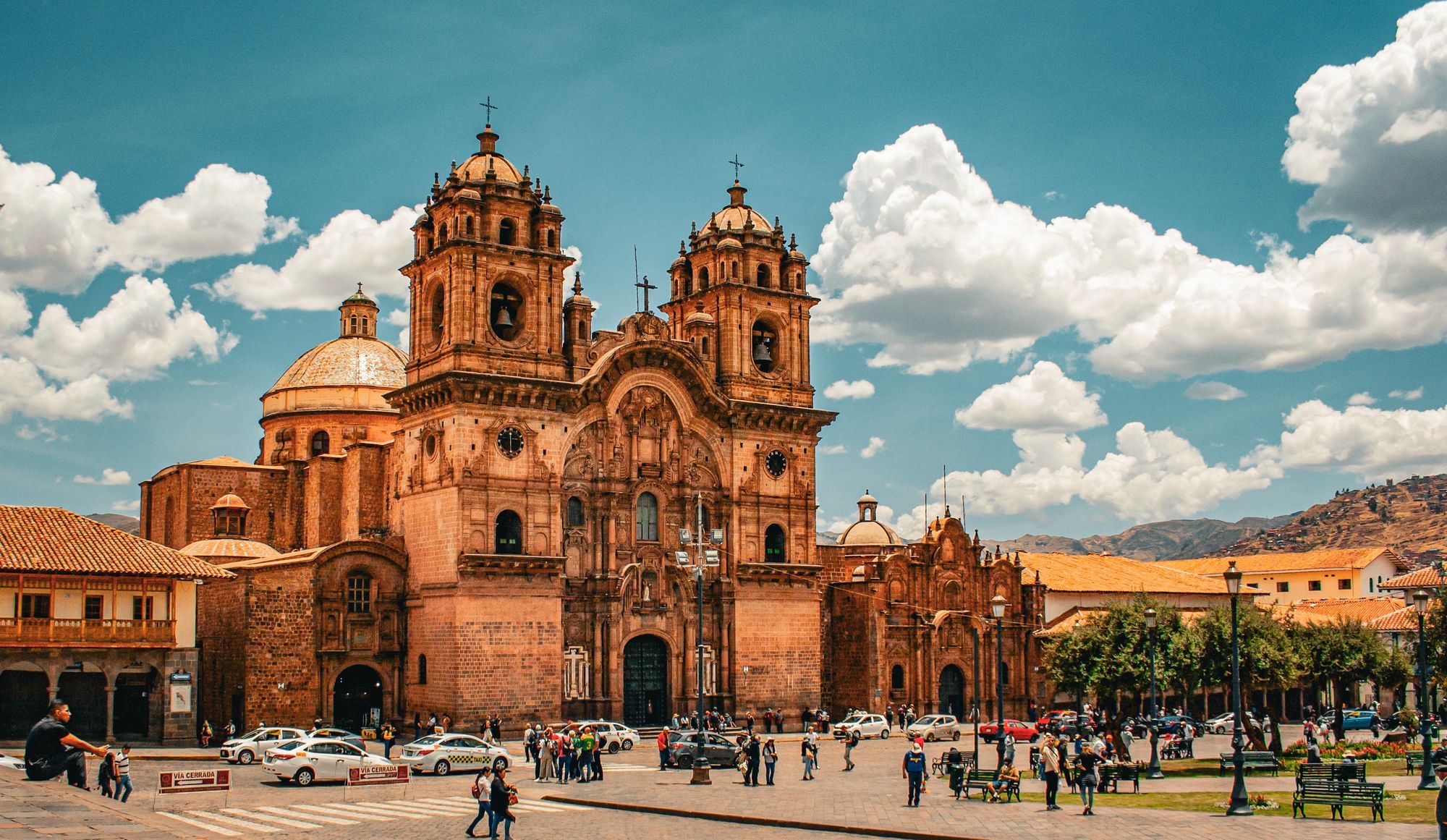
Cusco is a high Andean city in southern Peru, the former Inca capital and the main base for Machu Picchu, the Inca Trail and the Sacred Valley. Backpacker hostels cluster around the Plaza de Armas and in the hillside San Blas neighbourhood.
Known for
Adventure, Social
Hostel areas
Plaza de Armas area, San Blas, San Pedro market area
You’ll complete your booking with Hostelworld. We may earn a commission from qualifying bookings.
Best areas to stay in Cusco for hostels
01
Plaza de Armas area
Best for: First-timers and tour departures
The streets around the Plaza de Armas put you next to the cathedral, the main tour agencies, restaurants and the city’s busiest bars. Many treks and day tours pick up from or near the square, which makes early starts easier. The flat streets nearest the plaza also spare you the climbs of the hillside districts, though rooms facing busy streets can be noisy.
02
San Blas
Best for: Views, cafés and a bohemian feel
San Blas is Cusco’s artisan quarter, a few minutes uphill from the Plaza de Armas, with narrow cobbled lanes, whitewashed walls, craft workshops and small cafés. Peru’s official tourism site highlights its craftspeople. Hostels here tend to be smaller and quieter, often with terraces overlooking the city. The trade-off is steep stairs and slopes, which feel harder at altitude.
03
San Pedro market area
Best for: Local life near the markets
The streets around San Pedro market, south-west of the Plaza de Armas, have a more everyday, local feel, with food stalls, juice counters and shops selling produce and supplies. The area is flatter than San Blas and within walking distance of the centre. It is a practical base for travellers taking trains from Poroy or buses towards the Sacred Valley.
Live rooms and prices
Compare every hostel in Cusco
See live dorm beds, private rooms, prices and cancellation terms for your dates on Hostelworld.
You’ll complete your booking with Hostelworld. We may earn a commission from qualifying bookings. You’ll choose your dates and guests there.
Staying in Cusco
Cusco was the capital of the Inca Empire, and its old centre still shows it: Spanish colonial churches and mansions stand on top of precisely fitted Inca stone walls. The city sits at about 3,400 metres in the Peruvian Andes, and travellers often take it easy for their first day or two, strolling between plazas, markets and cafés rather than rushing into treks. The slower pace suits the city, which rewards time spent wandering its lanes.
For backpackers, Cusco is the base for some of South America’s most famous journeys. Trains for Machu Picchu run from nearby Poroy and Ollantaytambo, multi-day treks such as the Inca Trail start in the surrounding valleys, and day trips reach the Sacred Valley, its markets and its terraced Inca sites. Other popular outings include the Rainbow Mountain and Humantay Lake hikes, and the high-altitude routes to Puno and Lake Titicaca. Many hostels store luggage while guests are away trekking, and tour agencies around the centre make it easy to compare options in person.
The compact historic centre is walkable, though its cobbled streets climb steeply in places. The Plaza de Armas is the heart of the city, while the artisan quarter of San Blas, uphill to the north-east, is known for craft workshops, small galleries and views over terracotta rooftops. Between them lie markets such as San Pedro, museums and Qorikancha, the Inca sun temple later built over by a Dominican convent.
Travellers preparing for or returning from treks fill hostel common rooms and the bars around the Plaza de Armas.
Getting to Cusco
Alejandro Velasco Astete International Airport (CUZ) is on the south-eastern edge of the city, and a taxi to the Plaza de Armas or San Blas usually takes around 15–30 minutes, depending on traffic. Peru’s official tourism site gives a flight time of about 1 hour 15 minutes from Lima. Overland, buses from Lima take roughly a full day, and other routes link Cusco with Arequipa and Puno. Trains to Machu Picchu Pueblo (Aguas Calientes) leave from Poroy, outside the city, and from Ollantaytambo in the Sacred Valley.
Best time to visit
Cusco has a dry season from roughly May to September, with sunny days, cold nights and the highest demand for the Inca Trail and Machu Picchu. The rainy season runs from about November to March, with January and February the wettest; the classic Inca Trail closes each February for maintenance. April and October are shoulder months. Inti Raymi, the Inca festival of the sun, is celebrated on 24 June and is one of the city’s busiest times.
Hostel tips for Cusco
Nights at this altitude are cold, especially from May to September, so check for heating, good blankets and reliable hot showers.
Ask whether the hostel stores luggage free or for a fee while you trek or visit Machu Picchu.
If you stay in San Blas, expect steep steps from the Plaza de Armas; consider a taxi on arrival day.
Check pick-up arrangements: many trek and tour operators collect guests from hostels near the centre before dawn.
Many travellers take it easy on arrival, so a quieter hostel can suit your first nights before moving to a social one.
Book early for June to August and around Inti Raymi on 24 June, when demand peaks.
Cusco hostel FAQs
How long should I spend in Cusco before the Inca Trail?
Cusco sits at about 3,400 metres, and many travellers arrive at least two days before starting the Inca Trail, using the time to take it easy, explore the city and visit the Sacred Valley. Trek operators usually give their own recommendation, so check with yours when you book. For health questions about altitude, consult official travel advice and a medical professional before you travel.
Is San Blas a good area to stay in Cusco?
San Blas is a popular base for travellers who want a quieter, more bohemian atmosphere. It is Cusco’s artisan quarter, with cobbled lanes, craft workshops, cafés and views over the city, and it is only a few minutes’ walk from the Plaza de Armas. The main drawback is the steep climb, which many visitors find tiring in their first days at altitude.
What is the altitude of Cusco?
Cusco sits at about 3,400 metres (around 11,150 feet) above sea level; Peru’s official tourism site gives a figure of over 3,399 metres. It is much higher than Lima, which is on the coast, and higher than Machu Picchu. Many travellers plan a slow first day or two in the city. For advice on altitude, check official travel health guidance.
How do I get from Cusco to Machu Picchu?
Most visitors take a train to Machu Picchu Pueblo (Aguas Calientes), the town below the site, from Poroy near Cusco or from Ollantaytambo in the Sacred Valley, then ride a bus or walk up to the citadel. The other main option is a multi-day trek, such as the Inca Trail, which requires a permit through a licensed operator. Entry tickets are sold through Peru’s official Machu Picchu ticketing site.
When is the best time to visit Cusco?
The dry season, from about May to September, brings clear skies and is the most popular time for treks, though nights are cold and demand peaks in June to August. The rainy season runs from about November to March, with January and February the wettest, and the classic Inca Trail closes each February. April and October are quieter shoulder months.
How many days do you need in Cusco?
Many backpackers allow at least four to five days for Cusco, including a slow first day, a day in the city, a Sacred Valley trip and a visit to Machu Picchu. Adding the four-day Inca Trail or another multi-day trek means a week or more. Hostels near the centre are well placed for the early pick-ups most tours and treks use.