Uyuni is a small high-altitude town on the edge of the Salar de Uyuni, the departure point for most salt flat tours. Hostels are few and close together, around the main avenues and the old train area.
Known for
Adventure, Social
Hostel areas
Avenida Ferroviaria and the old railway area, Plaza Arce and the town centre, Near the bus terminal
You’ll complete your booking with Hostelworld. We may earn a commission from qualifying bookings.
Best areas to stay in Uyuni for hostels
01
Avenida Ferroviaria and the old railway area
Best for: Tour offices and short walks
The broad avenue near the former railway station is lined with tour agencies, cafés and shops. Some hostels sit here, so most things are within a short walk. The train cemetery lies a few kilometres to the south-west and tours often stop there. The area is quiet at night.
02
Plaza Arce and the town centre
Best for: Restaurants and easy orientation
A small central plaza with food places, minimarkets and money exchange, a short walk from the main avenues. Hostels here are convenient for early departures and late arrivals. Nights are cold at this altitude, so ask about blankets or heating.
03
Near the bus terminal
Best for: Late or early bus connections
The bus terminal and the stretch of town around it suit travellers arriving from La Paz, Potosí, Sucre or Oruro at awkward hours. A few simple hostels sit within walking distance. The terminal is a short walk from the centre, so you can also stay in the main streets and walk or take a taxi.
Live rooms and prices
Compare every hostel in Uyuni
See live dorm beds, private rooms, prices and cancellation terms for your dates on Hostelworld.
You’ll complete your booking with Hostelworld. We may earn a commission from qualifying bookings. You’ll choose your dates and guests there.
Staying in Uyuni
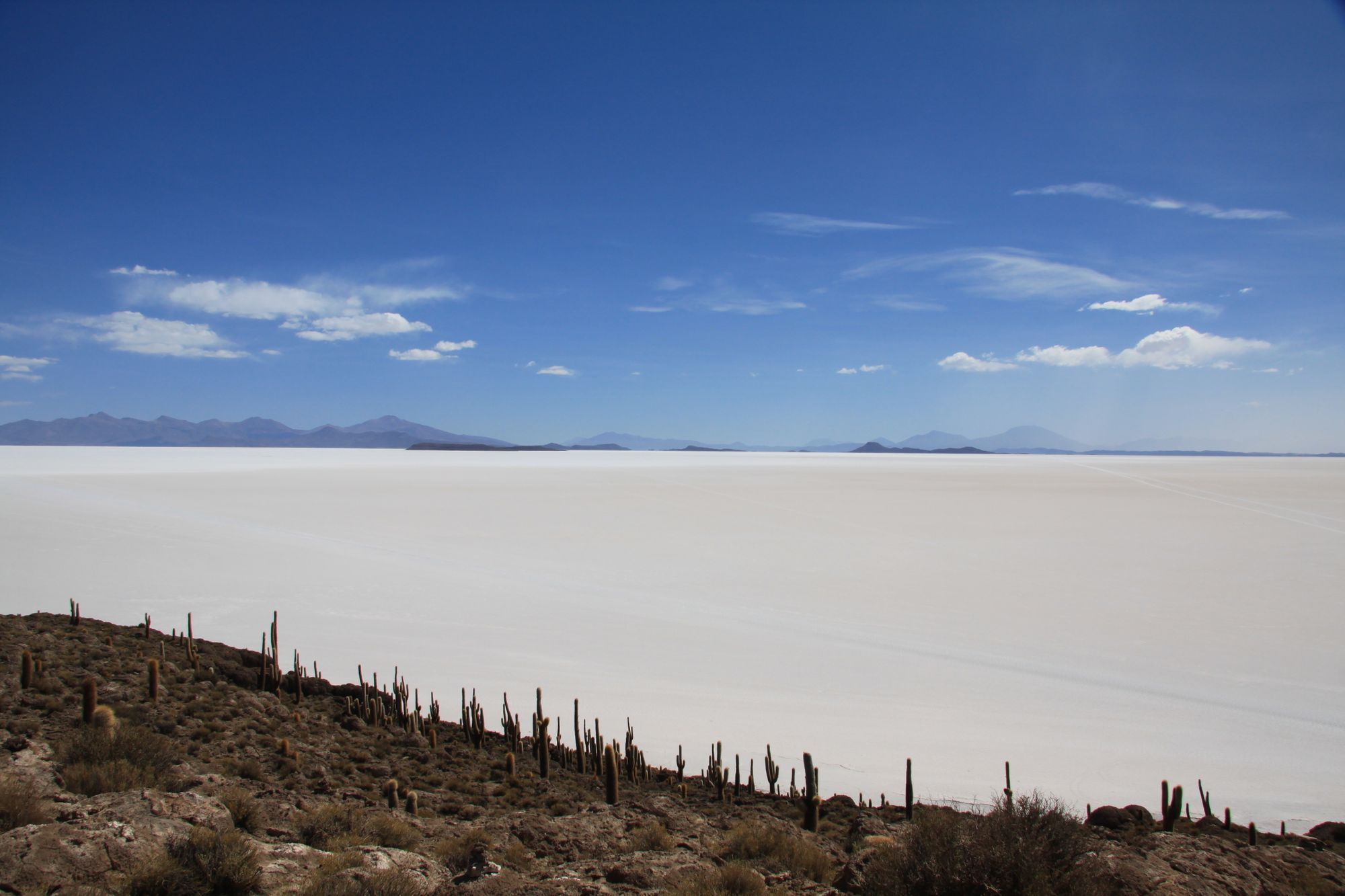
Uyuni is a small town on the Altiplano, and most people pass through it to reach the Salar de Uyuni, the huge salt flat to the west. The town itself is dusty and low-rise, with a main street lined with tour offices, restaurants and shops. It sits at around 3,700 metres, so the air is thin and nights are cold, particularly outside the warmer months.
Almost every visitor comes for a salt flat tour, which can run from a single day to several days and sometimes continue south into the Lagunas region and across the border to Chile. Hostels in town are used to early starts and late arrivals, and many travellers spend just one or two nights, one before and one after the tour. The old train cemetery on the edge of town is a short ride away.
The UK government notes that salt flat tours have no official minimum standards for operators, that four-wheel-drive vehicles are often poorly maintained, and that altitude sickness is a risk at the Salar de Uyuni. Take time to compare operators in person, ask about vehicles, drivers and insurance, and check what your policy covers before you book.
Uyuni is the starting point for multi-day four-wheel-drive tours across the Salar de Uyuni, and the UK government names the salt flats as an altitude-sickness risk.
Shared tour groups bring travellers together, and the small centre means most hostels, restaurants and tour offices are within a few streets of each other.
Getting to Uyuni
Uyuni has a small airport (UYU) with flights typically linking it to La Paz, and the town is a stop for long-distance buses from La Paz, Oruro, Potosí and Sucre, with overnight services common. Travel by road in Bolivia can be slow, and the UK government warns that protests and blockades can start without warning, so allow spare time. Cross-border tours towards San Pedro de Atacama in Chile leave from Uyuni. Check current conditions, and read the FCDO advice, before booking onward transport.
Best time to visit
The dry season from roughly May to October gives clear skies and easy road access, with very cold nights, especially June and July. The wet season, roughly from December to March, can bring shallow water on the salt flat and the mirror-like reflections many visitors want, although rain can also change routes or limit tours. Daytime sun is strong at altitude, and sources differ on the best month for reflections.
Hostel tips for Uyuni
Compare tour operators in person and ask about vehicles, drivers, insurance and the route, as the UK government notes there are no official minimum standards.
Check whether your hostel has heating, extra blankets and hot water, because nights are cold at this altitude.
Ask about luggage storage so you can leave a large bag while on a multi-day tour.
If you arrive by overnight bus, confirm early check-in or whether you can leave bags at the hostel.
Carry some cash, as card payments and ATMs can be limited in a small town.
Uyuni hostel FAQs
Do I need to stay overnight in Uyuni?
Most travellers do. Salt flat tours start in the morning from the town, and buses and flights often arrive early or late. A common pattern is one night before the tour and one after. If your tour ends in Uyuni and you have an onward bus or flight booked, you may not need a second night. Check departure times in advance.
How do I get to Uyuni from La Paz?
Overnight buses link La Paz and Uyuni, usually taking around 10 to 12 hours, and flights typically connect the two cities in around an hour. Road travel can be affected by protests or blockades, which the UK government says can start without warning. Compare options, allow spare time and check the Bolivian road authority status map before leaving.
Are Uyuni salt flat tours regulated?
The UK government says there are no official minimum standards for salt flat tour operators. It advises getting local advice and using reputable companies, noting that vehicles can be poorly maintained and that four-wheel-drive vehicles are often needed. Check that your travel insurance covers the activity, and ask operators about their vehicles, drivers and emergency equipment.
When is the best time to see the salt flat?
It depends what you want. The dry season from around May to October is better for access, longer routes and clear weather. The wetter months, roughly December to March, can produce the reflective water layer people photograph, but rain can limit routes. Sources differ on exact timing, so ask operators about current salt flat conditions before you choose.
How high is Uyuni and will altitude be a problem?
Uyuni town sits at around 3,700 metres and tours go higher, with the UK government naming the Salar de Uyuni as an altitude-sickness risk. Reactions vary from person to person. Many people spend time at altitude in La Paz or Sucre first, drink water and take it easy. TravelHealthPro and a travel clinic can give guidance before you go.