Bangkok is the most common starting point for a Southeast Asia trip. Hostels cluster around Khao San Road and Banglamphu, Silom, Sukhumvit and Chinatown, each with its own pace and transport links.
Known for
Social, Party
Hostel areas
Khao San Road and Banglamphu, Silom, Sukhumvit, Chinatown (Yaowarat)
You’ll complete your booking with Hostelworld. We may earn a commission from qualifying bookings.
Best areas to stay in Bangkok for hostels
01
Khao San Road and Banglamphu
Best for: First-timers and meeting other travellers
The classic backpacker strip, with bars, street-food carts and tour desks packed into a few blocks near the Grand Palace and Wat Pho. Nearby Soi Rambuttri and Phra Athit Road are quieter. There is no Skytrain stop, so travellers use Chao Phraya Express boats from Phra Athit pier, taxis or the A4 airport bus from Don Mueang. Expect late-night noise on the main road itself.
02
Silom
Best for: Nightlife with good transport links
A business district by day that turns lively after dark, with night markets, rooftop bars and some of the city's best-known LGBTQ+ venues. BTS Sala Daeng and MRT Silom stations connect it to the rest of the city, and Lumphini Park offers green space for a morning run. It is a practical choice if you plan to move around Bangkok a lot.
03
Sukhumvit
Best for: Easy airport access and big-city nightlife
A long road running east from the centre, with hostels spread around the Nana, Asok and Phrom Phong BTS stations. It has malls, international restaurants and busy bar streets, especially near Nana and Soi 11. Asok links the Skytrain to the MRT, and Makkasan station on the Airport Rail Link is close by, which helps on travel days.
04
Chinatown (Yaowarat)
Best for: Street food and old-city atmosphere
Yaowarat Road fills with food stalls every evening, and the side lanes hide temples, gold shops and wholesale markets. Hostels here often occupy restored shophouses near Talat Noi and the river. MRT Wat Mangkon puts the area on the metro network, and river boats run from nearby piers to the Grand Palace and Wat Arun.
Live rooms and prices
Compare every hostel in Bangkok
See live dorm beds, private rooms, prices and cancellation terms for your dates on Hostelworld.
You’ll complete your booking with Hostelworld. We may earn a commission from qualifying bookings. You’ll choose your dates and guests there.
Staying in Bangkok
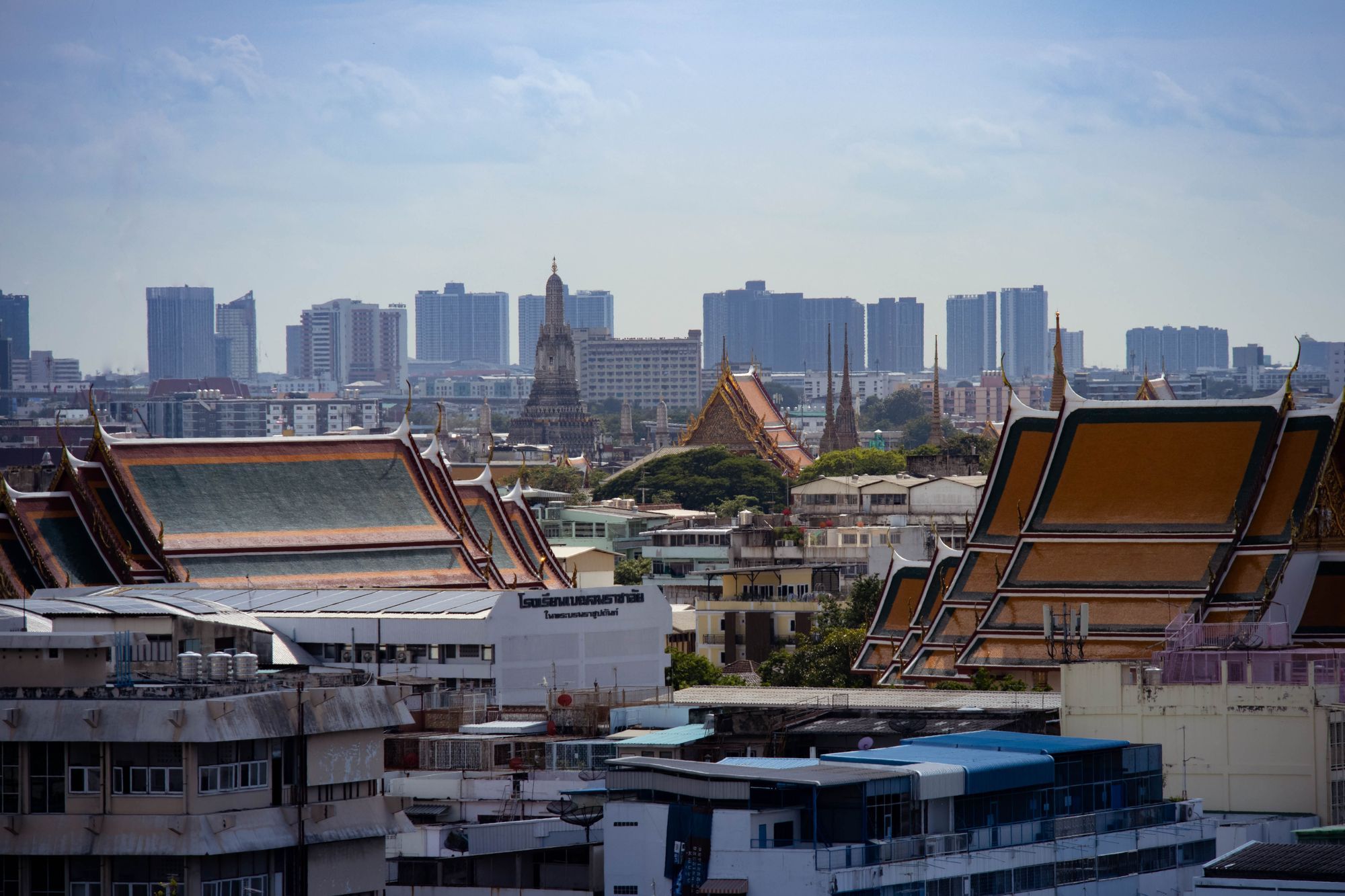
Bangkok is where many backpackers land first, and the city rewards a few days before you head north to Chiang Mai or east towards Cambodia. Grand temples such as Wat Pho and Wat Arun sit beside the Chao Phraya River. Street food is part of everyday life, especially in Chinatown along Yaowarat Road. The skyline of glass towers rises above the old canals in the space of a single train ride.
Choosing a neighbourhood matters more here than in smaller destinations, because Bangkok is huge and traffic is slow. Khao San Road and the surrounding Banglamphu lanes have been the classic backpacker base for decades and sit close to the old royal quarter. Silom and Sukhumvit are on the BTS Skytrain and MRT lines, which makes airport runs and cross-city trips easier. Chinatown suits travellers who mainly come to eat.
Hostels in Bangkok range from compact dorms in converted shophouses to large social properties with rooftop bars and organised nights out. Air conditioning is standard in most dorms, and it matters for most of the year. Many travellers base themselves in one area and use the river boats, the Skytrain and the MRT to reach the others. Many also return to Bangkok between other legs of a trip, so it pays to try a different area each time.
Khao San Road, Silom and Sukhumvit are known for late-opening bars, and the Bangkok Metropolitan Administration has run them as weekend walking streets with live music and street food.
Getting to Bangkok
Bangkok has two airports. Suvarnabhumi (BKK) handles most long-haul flights; the Airport Rail Link runs to Makkasan and Phaya Thai in around half an hour, with BTS and MRT connections onward, and public buses also leave from the airport transport centre. Don Mueang (DMK) serves many low-cost airlines; airport buses A1 to A4 run into town, with A4 going to Khao San Road, and the SRT Red Line also stops at Don Mueang. Long-distance trains use Krung Thep Aphiwat Central Terminal. Taxis are metered, but traffic can add a lot of time.
Best time to visit
The cool, dry season from November to February is the most comfortable time to visit and the busiest for hostels. March to May is the hot season, with very warm, humid afternoons. The rainy season usually runs from around May or June to October, with heavy but often short downpours and occasional localised flooding. Air-conditioned dorms and early starts help at any time of year.
Hostel tips for Bangkok
Pick your area by transport: a hostel within walking distance of a BTS, MRT or river-boat pier saves hours in traffic.
If you stay on Khao San Road itself, ask for a room or dorm away from the street side, or bring earplugs.
Check that dorms have air conditioning and whether it runs all night, as some hostels limit hours.
If you arrive late at Don Mueang, note when the airport buses stop running and plan a taxi or ride-hail as a backup.
Lockers are common but sizes vary; a small padlock that fits standard hostel lockers is useful.
Cover shoulders and knees for temple visits such as Wat Pho and the Grand Palace, so pack something suitable in your daypack.
Bangkok hostel FAQs
Where should I stay in Bangkok for hostels?
Most backpackers choose between four areas. Khao San Road and Banglamphu suit first-timers who want a social scene near the Grand Palace. Silom and Sukhumvit suit travellers who want Skytrain and metro access and big-city nightlife. Chinatown (Yaowarat) suits food lovers who want an older, atmospheric neighbourhood. If you will only be in Bangkok a few days, choose based on where you plan to spend most of your time.
How do I get from Suvarnabhumi Airport to Khao San Road?
There is no direct rail line to Khao San Road. A common option is the Airport Rail Link to Phaya Thai, then a taxi or ride-hail for the last stretch. Public buses also run from the airport transport centre towards Sanam Luang, close to Khao San Road. A metered taxi goes door to door but can be slow in traffic. Allow at least an hour, and more at rush hour.
Which Bangkok airport is better for backpackers?
It depends on your airline rather than the airport. Suvarnabhumi (BKK) handles most full-service and long-haul flights and has the Airport Rail Link into the city. Don Mueang (DMK) is the base for many low-cost carriers on regional routes, and its A4 bus runs to Khao San Road. A free shuttle runs between the two airports for passengers with onward tickets, but allow plenty of time for connections.
Is Khao San Road too noisy for a hostel stay?
The main strip of Khao San Road is loud until late, especially at weekends, so light sleepers often choose hostels on nearby lanes such as Soi Rambuttri or around Phra Athit Road. These are a few minutes' walk from the action but noticeably calmer. Reading recent guest comments about noise and asking for a room at the back of the building also helps.
How many days do backpackers usually spend in Bangkok?
Many travellers spend three to four days in Bangkok at the start or end of a trip. That is enough to see the Grand Palace, Wat Pho and Wat Arun, explore Chinatown's street food, take a river boat and visit a weekend or night market. Some return between other legs, because Bangkok is the main transport hub for routes north to Chiang Mai and east towards Siem Reap.