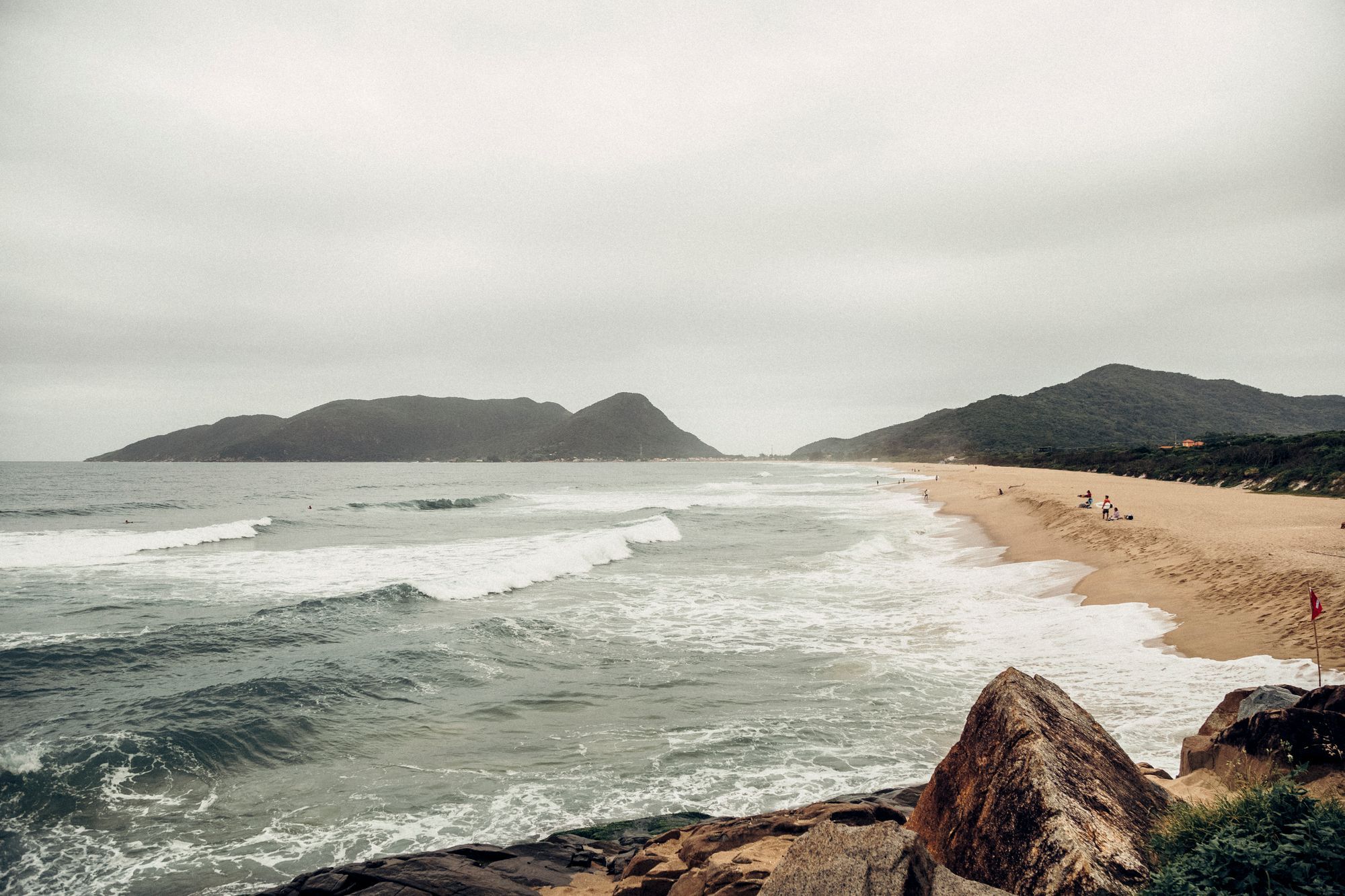
Florianópolis is mostly on Ilha de Santa Catarina, with dozens of beaches, a large lagoon and forested hills. Hostels cluster around Lagoa da Conceição, Campeche, the northern beaches and the historic centre.
Known for
Social, Relaxed, Adventure
Hostel areas
Lagoa da Conceição, Campeche, Ingleses and the north, Centro
You’ll complete your booking with Hostelworld. We may earn a commission from qualifying bookings.
Best areas to stay in Florianópolis for hostels
01
Lagoa da Conceição
Best for: Social atmosphere, nightlife and lagoon views
A neighbourhood built around a large lagoon in the middle of the island, with bars, restaurants, shops and watersports. It is the busiest area after dark and the most common base for travellers who want company. Beaches such as Joaquina and Mole are a short ride away, and Barra da Lagoa is reached by a trail or road.
02
Campeche
Best for: Surf and a long beach on the south-east coast
A residential neighbourhood with a long beach, surf schools and cafés, facing Campeche Island. It is calmer than Lagoa but still has plenty of food options and shops. It suits travellers who want daily time on the sand. A car or bus is useful for reaching other parts of the island, as the walk to Lagoa is long.
03
Ingleses and the north
Best for: Big beaches and summer crowds
The north of the island has large beaches such as Ingleses and Canasvieiras, with shops, restaurants and a strong summer season. It is busy from December to March and much quieter in winter. The area suits travellers who want a long beach and plenty of services, though getting to the south of the island takes time.
04
Centro
Best for: Bus connections and short stays
The historic centre sits near the bridges and the main bus terminals. It has old buildings, markets and the waterfront, but it is not a beach area. It is practical for arrivals, departures and short stops, with onward buses to the beaches. Many travellers stay in Lagoa or Campeche for the island experience.
Live rooms and prices
Compare every hostel in Florianópolis
See live dorm beds, private rooms, prices and cancellation terms for your dates on Hostelworld.
You’ll complete your booking with Hostelworld. We may earn a commission from qualifying bookings. You’ll choose your dates and guests there.
Staying in Florianópolis
Florianópolis is the capital of Santa Catarina state, and most of the city sits on an island linked to the mainland by bridges. The island is known for its beaches, which range from busy stretches with kiosks to quieter bays reached by short trails. Surfing, stand-up paddleboarding, hiking and sandboarding are all popular, and the lagoon area adds cafés, restaurants and a lively evening scene.
The island is long and traffic can build up on the main roads in summer, so choosing the right area matters. Lagoa da Conceição is the best-known base for social travellers, Campeche is known for its long beach and surf, the north has large resort beaches, and the historic centre is practical for buses and short stays. Distances look small on a map but journeys between areas often take longer than expected.
Hostels on the island are often relaxed and beach-focused, with boards, hammocks and shared kitchens. Some organise barbecues and trips to trails and viewpoints. Summer, from December to March, is the busiest period, with high demand for dorms and crowded roads. Outside those months the island is quieter, which suits hikers and surfers who prefer fewer people, though some seasonal businesses reduce their hours.
The island's trails, surf beaches and sandboarding dunes make activities a large part of a stay.
Getting to Florianópolis
Florianópolis-Hercílio Luz International Airport (FLN) is in the Carianos area on the island's southern side; the operator's website lists how to get there, and the airport has a new intermodal terminal. City buses, taxis and ride-hailing connect the airport to Centro and the beaches. Long-distance buses from São Paulo, Porto Alegre and other cities arrive at the main bus terminal near the centre. Journeys across the island can be slow at weekends and in summer, so allow extra time.
Best time to visit
Summer, from December to March, is the hottest and busiest period, with beach weather, crowded roads and high demand for dorms. April to June and September to November are generally milder and quieter, though the sea is cooler and rain is possible. July and August can be cool and damp, with fewer visitors, so some seasonal businesses may reduce their hours. Surf conditions vary through the year.
Hostel tips for Florianópolis
Choose by area, not by the city name: Lagoa suits nightlife, Campeche suits surf, and the north suits big beaches. Travel between them takes time.
Book well ahead for January, Carnival and school holidays, when demand is highest and roads are busy.
Check how far the hostel is from the beach and whether there is a bus stop nearby, as some are uphill.
Ask whether the hostel rents surfboards or offers lessons, and if it can arrange transfers to trails.
Bring a light rain jacket and mosquito repellent, as weather can change quickly and evenings near the lagoon can be buggy.
Florianópolis hostel FAQs
Where should I stay in Florianópolis as a backpacker?
Lagoa da Conceição is the most popular base for backpackers because of its bars, restaurants and social hostels. Campeche suits surfers who want a long beach, the north suits big summer beaches, and Centro suits short stops near the bus terminals. The island is long, so pick one main base and use buses or ride-hailing for day trips.
How do I get from Florianópolis Airport to Lagoa da Conceição?
Florianópolis Airport (FLN) is on the southern part of the island. Taxis and ride-hailing apps are the most direct options for Lagoa, while public buses usually connect through the city terminals. Journey times vary with traffic, and weekends and summer afternoons can be slow, so allow extra time, especially if you have an onward bus or a tight check-in.
When is the best time to visit Florianópolis?
Summer, from December to March, is the hottest and busiest time, with beach weather and a lively social scene. Spring and autumn are milder and quieter, which suits hiking and surfing. Winter, from June to August, can be cool and damp. Sources differ on exact conditions, so check a forecast and book early for January and Carnival.
Do I need a car in Florianópolis?
You can get around without a car using buses, taxis, ride-hailing and walking, but the island is long and some beaches are far apart. Public buses connect the main areas, though frequency varies by route and season. A rented scooter or car makes it easier to reach quieter beaches, but traffic on the main roads can be heavy in summer.
Is Florianópolis a good place to learn to surf?
Florianópolis has surf schools at beaches such as Campeche, Joaquina and Mole, and many hostels can recommend or arrange lessons. Conditions vary by beach, swell and season, so beginners usually go with an instructor who knows the local conditions. Check lesson lengths, equipment and group sizes before booking, and ask about water conditions on the day.