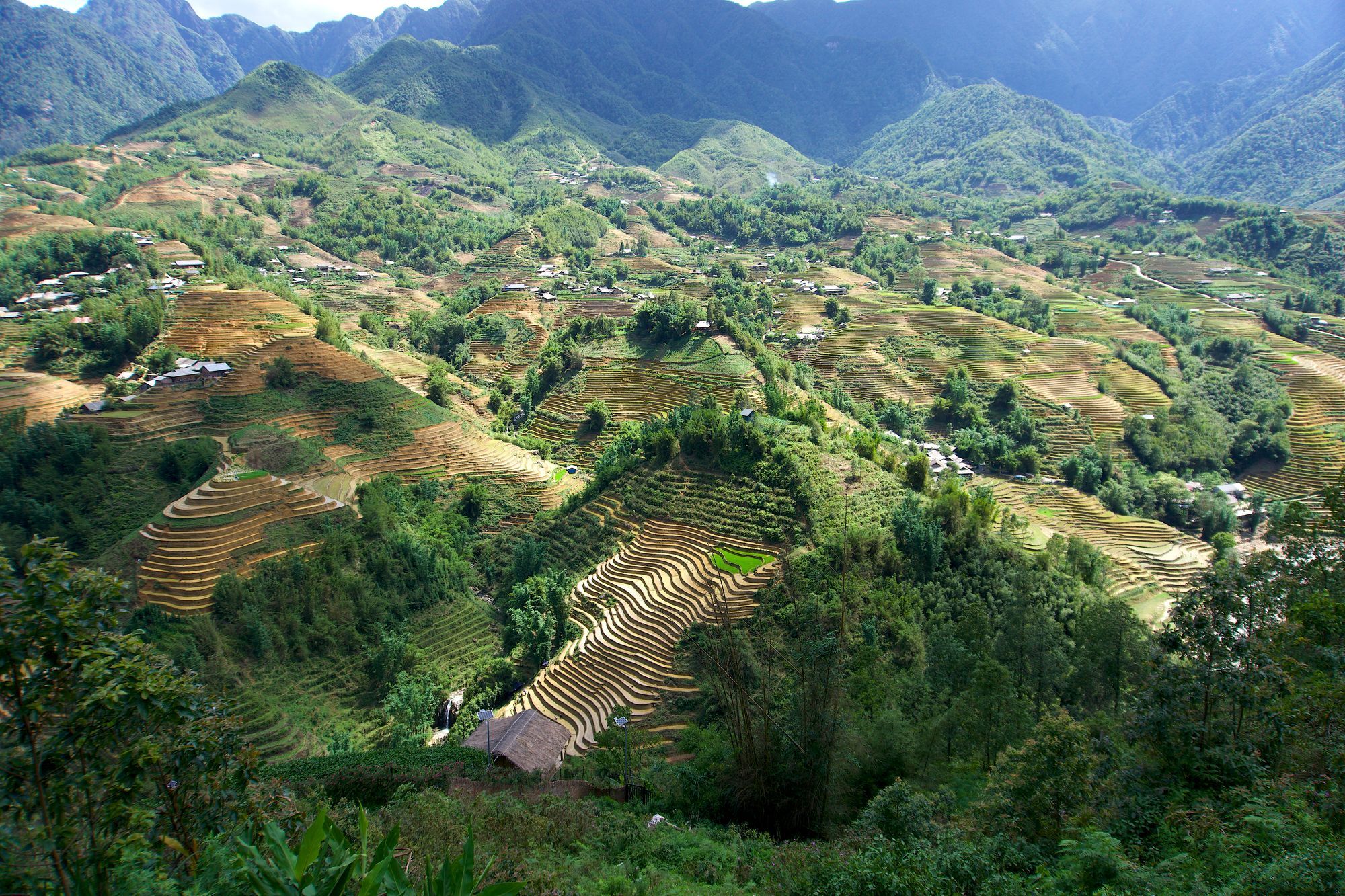
Sa Pa is a hill town in north-west Vietnam, known for terraced rice fields, villages and Fansipan, the highest peak in Indochina. Hostels are in the town centre and in nearby valley villages, reached from Lào Cai by road.
Known for
Adventure, Relaxed
Hostel areas
Sa Pa town centre, Cát Cát road, Valley villages (Tả Van and Lao Chải)
You’ll complete your booking with Hostelworld. We may earn a commission from qualifying bookings.
Best areas to stay in Sa Pa for hostels
01
Sa Pa town centre
Best for: Treks, tours and transport
The main base, with hostels, cafés, restaurants and trekking agencies close together around the central square and the stone church. Most buses and minibuses from Lào Cai arrive here. Expect fog and cool evenings, and ask about heating in dorms.
02
Cát Cát road
Best for: Village walks and a quieter base
The road leading down from the town to Cát Cát village, with guesthouses and a few hostels. It is within walking distance of the centre and gives quick access to a village that Vietnam Tourism lists as visitable without a guide.
03
Valley villages (Tả Van and Lao Chải)
Best for: Trekking and homestays
Villages in the Mường Hoa Valley reached on foot or by motorbike, where trekkers often sleep in homestays and a few hostels. Facilities are simpler than in town, and trails can be slippery in wet weather. Many travellers book this stay through a trekking operator.
Live rooms and prices
Compare every hostel in Sa Pa
See live dorm beds, private rooms, prices and cancellation terms for your dates on Hostelworld.
You’ll complete your booking with Hostelworld. We may earn a commission from qualifying bookings. You’ll choose your dates and guests there.
Staying in Sa Pa
Sa Pa is a mountain town in north-west Vietnam, surrounded by terraced rice fields and villages. Fansipan, nicknamed the "Roof of Indochina", rises above the town to 3,143 m and can be reached on foot or by cable car. Vietnam Tourism lists Cát Cát and Tả Phìn among the villages that can be visited without a guide.
The climate is cool all year, with cold winters and occasional frost near the summit. Mist and low cloud are common, so views can come and go, and trails can be slippery after rain. Many travellers spend two to three nights and add a trek to nearby villages or a visit to the Sunday market at Bắc Hà.
Hostels in Sa Pa are mostly in and around the town centre, with a smaller number of homestays in valley villages for trekkers. They often arrange treks, motorbike hire and transport to Lào Cai. Plan for cooler evenings than elsewhere in Vietnam and bring warm layers, even in the dry season.
Vietnam Tourism describes the terraced rice fields in the valley below Sa Pa as still farmed much as they have been for centuries.
Getting to Sa Pa
Sa Pa has no airport. The usual route is from Hanoi to Lào Cai, either by overnight train or by bus, then a road transfer of around an hour or so to Sa Pa. Direct buses and minibuses from Hanoi also run to Sa Pa itself, typically taking around five to six hours. Check timetables with the operator, as services and journey times vary by season and road conditions.
Best time to visit
Vietnam Tourism suggests September to November for golden terraces and clear skies, and March to May for mild weather and flowers. The climate is cool all year, with cold winters and occasional frost near Fansipan. Summer is wetter, with mist and heavy showers, and trails can be slippery. Pack layers whenever you go.
Hostel tips for Sa Pa
Bring warm layers and a rain jacket, as even the dry season can be cool and misty.
Ask the hostel about heating or extra blankets in dorms during the winter months.
Check whether trekking guides are arranged through the hostel and what is included.
Plan transport to and from Lào Cai in advance, particularly if you are arriving on an overnight train.
Keep a small bag for homestay nights and use the hostel's luggage storage for the rest.
Confirm viewpoints and cable-car conditions locally, as cloud can hide the summit of Fansipan.
Sa Pa hostel FAQs
How do I get to Sa Pa from Hanoi?
Sa Pa has no airport. Most travellers take the overnight train or a bus from Hanoi to Lào Cai, then a road transfer of around an hour to Sa Pa. Direct buses and minibuses from Hanoi also run to Sa Pa itself and typically take around five to six hours. Your hostel can often help book tickets and transfers.
When is the best time to visit Sa Pa?
Vietnam Tourism suggests September to November for golden rice terraces and clear skies, and March to May for mild weather and flowers. Summer is wetter with mist and heavy showers, while winters are cold with occasional frost near Fansipan. Weather changes quickly, so pack layers and keep your itinerary flexible.
How high is Fansipan and can I reach it without trekking?
Fansipan, nicknamed the "Roof of Indochina", is 3,143 m high. A cable car climbs towards the summit, and there are also trekking routes for those who prefer to walk. Cloud and mist are common, so views are not guaranteed. Check current conditions and operating times locally before planning your visit.
Can I visit villages near Sa Pa without a guide?
Vietnam Tourism lists Cát Cát and Tả Phìn among the villages that can be visited without a guide. For longer treks through the Mường Hoa Valley, many travellers use a local guide or a hostel-arranged trek, partly for navigation on slippery trails. Be respectful in villages and ask before taking photographs of people.
How many days do I need in Sa Pa?
Many travellers spend two to three nights. That allows time for a village trek, a visit to Fansipan if the weather is clear, and a day for the markets or terraces. If you are on a tight schedule, an overnight train from Hanoi and a single full day can work, but mist can disrupt plans, so a spare day helps.