Pai is a small town in Mae Hong Son province, reached from Chiang Mai along a famously winding mountain road. Hostels sit along the walking-street centre and in the quieter countryside around it.
Known for
Relaxed, Social, Adventure
Hostel areas
Town centre and Walking Street, Along the Pai River, Countryside and rice fields
You’ll complete your booking with Hostelworld. We may earn a commission from qualifying bookings.
Best areas to stay in Pai for hostels
01
Town centre and Walking Street
Best for: Food, bars and meeting other travellers
The compact centre around the Walking Street is where the markets, cafés, live-music bars and tour desks cluster. Everything is walkable, and it is the easiest base without a scooter. Evenings can be lively, so light sleepers may prefer a dorm a few streets back. The bus station is a short walk or ride away.
02
Along the Pai River
Best for: A quieter, riverside stay
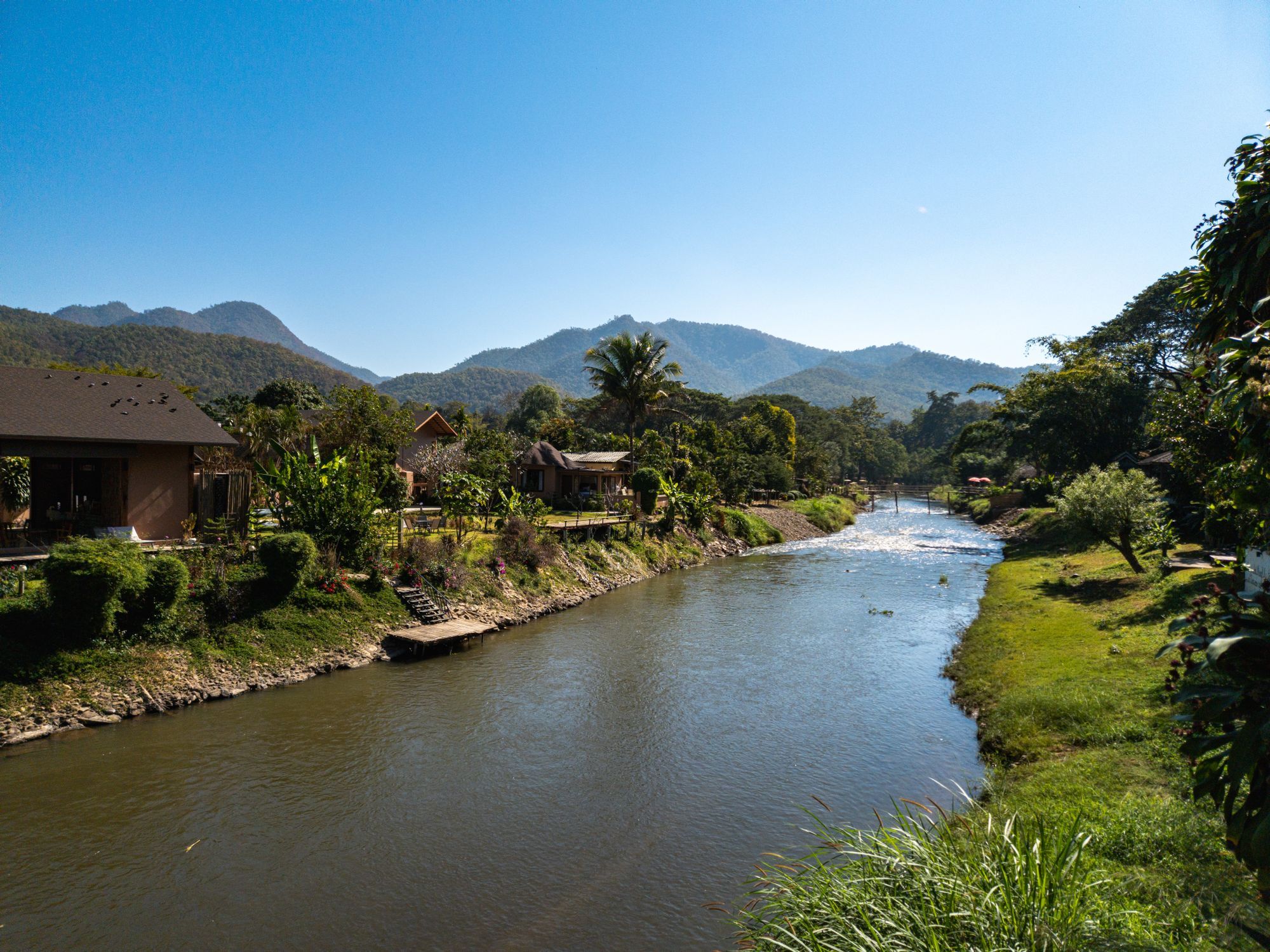
Several hostels and bungalow-style properties sit along the river and the lanes leading out of town. They are generally calmer than the centre at night and often have garden space, but the walk into town is longer, so many guests rely on bicycles or scooters. Check the route after dark before booking.
03
Countryside and rice fields
Best for: Slow days and views
Beyond the edge of town, lanes run through rice fields towards viewpoints, hot springs and waterfalls. Stays here are quiet and scenic, with fewer food options on the doorstep. You will need your own transport or reliable lifts to get to the centre, and lanes can be unlit at night.
Live rooms and prices
Compare every hostel in Pai
See live dorm beds, private rooms, prices and cancellation terms for your dates on Hostelworld.
You’ll complete your booking with Hostelworld. We may earn a commission from qualifying bookings. You’ll choose your dates and guests there.
Staying in Pai
Pai lies in the mountains of Mae Hong Son province, north-west of Chiang Mai. The Tourism Authority of Thailand (TAT) describes it as a tiny town whose peaceful atmosphere often keeps visitors longer than planned. It was once a sleepy Shan town and is now known for a laid-back scene of cafés, live music and a Walking Street market.
Most visitors arrive on the sinuous mountain road from Chiang Mai, which TAT notes has around 1,864 curves. Once in town, much of what there is to do sits within a short ride: Pai Canyon for sunset, the Memorial Bridge, hot springs, waterfalls and viewpoints such as Yun Lai. Rafting, tubing, trekking and cycling are the activities TAT mentions most often.
Hostels in Pai range from compact dorms close to the walking street to bungalow-style places set among rice fields and along the river. Many travellers hire a bicycle or scooter to get around, so it is worth thinking about how you will reach the sights before choosing where to stay. Pai suits slower itineraries more than a quick overnight stop.
TAT lists rafting, tubing, trekking, cycling and hot springs among the activities around Pai.
Getting to Pai
Most travellers reach Pai by minivan from Chiang Mai, a journey TAT puts at around three hours from Chiang Mai International Airport (CNX) to the Pai bus station, along a winding road. Minivans typically leave from Chiang Mai city and the airport area. The road has many bends, so travellers prone to motion sickness often prepare in advance. Pai is also a stop on the Mae Hong Son Loop, which many people drive by rented car or motorbike over several days. Check current timetables with the operator, as they change.
Best time to visit
TAT says Mae Hong Son province can be visited year-round, but suggests the cooler months of November to January as the best time, when early-morning mist is common. The rainy season typically runs from around June to October, when roads and trails can be muddy. Northern Thailand often has hazy air from seasonal burning around February to April, so check current air-quality reports before booking.
Hostel tips for Pai
Decide whether you want the walking-street centre or a quieter spot, and check how far the hostel is from town before booking.
If you plan to hire a scooter, check the hostel offers secure parking and ask about local road conditions.
The road from Chiang Mai is winding, so pack a small bag you can reach on the minivan.
Nights can be cool in the mountains from November to January, so check that dorms provide blankets.
Ask whether the hostel arranges trips to Pai Canyon, waterfalls or hot springs, or whether you would need to organise them yourself.
Pai hostel FAQs
How do I get from Chiang Mai to Pai?
Most travellers take a minivan from Chiang Mai to Pai bus station, a journey the Tourism Authority of Thailand puts at around three hours from Chiang Mai International Airport. The road is winding, with roughly 1,864 curves, so it can be uncomfortable for people who get motion sick. Others drive a rented car or motorbike, often as part of the Mae Hong Son Loop.
Where do backpackers stay in Pai?
Most hostels are either in the town centre near the Walking Street, or spread along the river and out into the rice fields. The centre is walkable and social but can be noisy at night. Outlying areas are calmer and more scenic, though you will usually need a bicycle or scooter to reach the centre and the main sights.
What is there to do in Pai?
TAT highlights Pai Canyon at sunset, the Memorial Bridge, the Yun Lai viewpoint, hot springs, and activities such as rafting, tubing, trekking and cycling. The evening Walking Street offers food stalls and handicrafts. Many sights are a short ride from town, so you can see a lot in two or three days, though many people stay longer.
When is the best time to visit Pai?
TAT suggests the cooler months of November to January as the best time to visit the Mae Hong Son area, with misty mornings. The province can be visited all year, but the rainy season typically runs from around June to October, and seasonal haze is common in northern Thailand in the hotter months, so check air-quality reports before you travel.
Do I need a scooter in Pai?
You do not strictly need one, as the town centre is walkable and bicycles are widely available. A scooter makes it easier to reach canyons, waterfalls and viewpoints at your own pace. Many people instead join group trips or share transport. If you ride, check that you are licensed and insured, and read the official travel advice on road safety before you go.