Santa Teresa is a surf town on the southern Nicoya Peninsula in Costa Rica’s Puntarenas province. Backpackers come for consistent waves, yoga and sunsets, reaching it via the Puntarenas–Paquera ferry or Guanacaste.
Known for
Relaxed, Adventure, Social
Hostel areas
Playa Carmen, Central Santa Teresa, North Santa Teresa and Playa Hermosa, Mal País
You’ll complete your booking with Hostelworld. We may earn a commission from qualifying bookings.
Best areas to stay in Santa Teresa for hostels
01
Playa Carmen
Best for: Convenience and learning to surf
Playa Carmen sits where the road from Cóbano meets the coast, making it the practical hub, with supermarkets, ATMs and bus and shuttle stops nearby. Its beach is a popular place for lessons. Staying here keeps you central to both Santa Teresa and Mal País, though the junction can be busier and dustier than the quieter ends of the coast road.
02
Central Santa Teresa
Best for: Social backpackers who want to walk everywhere
North of Playa Carmen, the main stretch of Santa Teresa has the densest mix of hostels, surf shops, cafés, restaurants and yoga studios, with paths down to the beach. It is the most sociable part of the coast and the easiest to manage without a vehicle. Expect traffic and dust on the main road during busy months.
03
North Santa Teresa and Playa Hermosa
Best for: Quieter beaches and longer stays
Towards the northern end of the road, the area around Playa Hermosa is more spread out and quieter, with wide beaches and fewer businesses. It suits travellers staying a week or more who want calmer surroundings. Distances are longer here, so many people rent a bicycle, scooter or quad to get to shops and surf breaks.
04
Mal País
Best for: A slower, fishing-village pace
South of Playa Carmen, Mal País has a rockier coastline, tide pools and a quieter, more local feel, with the Cabo Blanco area further south. There are fewer places to stay and eat than in central Santa Teresa. It is a good choice for travellers who prefer peace in the evenings and do not mind a ride to the busier stretches.
Live rooms and prices
Compare every hostel in Santa Teresa
See live dorm beds, private rooms, prices and cancellation terms for your dates on Hostelworld.
You’ll complete your booking with Hostelworld. We may earn a commission from qualifying bookings. You’ll choose your dates and guests there.
Staying in Santa Teresa
Santa Teresa is one of the main tourism areas on the southern tip of the Nicoya Peninsula, part of Costa Rica’s Puntarenas province. It is less a compact town than a long strip of road running parallel to the Pacific, with beaches, surf schools, cafés, yoga studios and places to stay strung along it. Mal País lies at the southern end, and Playa Carmen sits at the junction with the road inland to Cóbano.
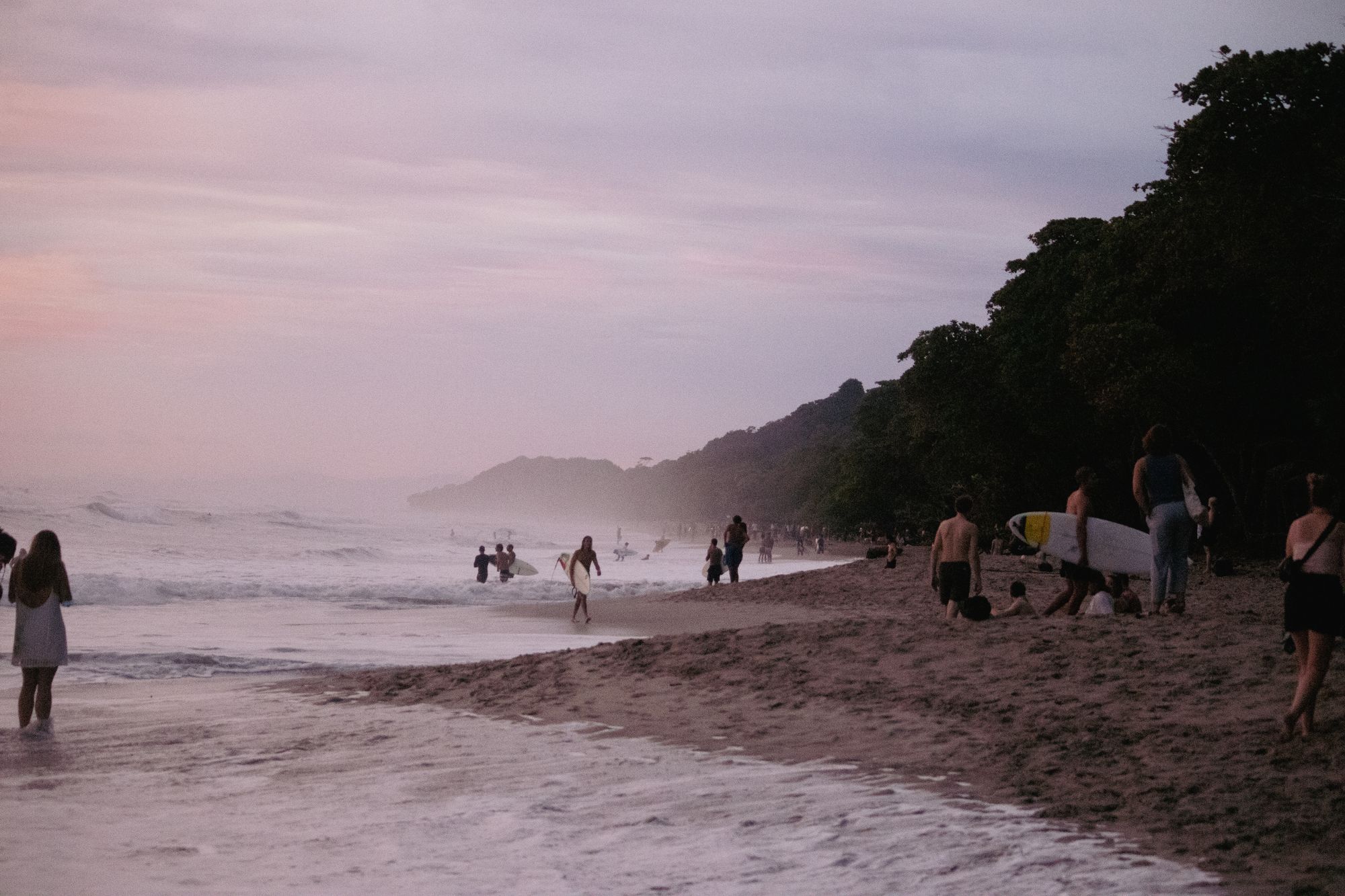
Surf is the reason most backpackers come. The coastline here has beach breaks suited to different levels, from learners at the more forgiving spots to experienced surfers chasing bigger days. Board rental and lessons are easy to find. Outside the water, the rhythm is relaxed: yoga classes, long beach walks and gathering on the sand at sunset are part of daily life for many visitors, and plenty of people extend their stay.
Getting here takes some effort, which is part of the appeal. Most routes involve the ferry across the Gulf of Nicoya from Puntarenas to Paquera, followed by a drive along the peninsula, or a longer road trip from Guanacaste. The main road can be dusty in the dry season and muddy in the rainy season. Rip currents are common on Costa Rica’s Pacific beaches and lifeguards are often absent, so read official travel advice and surf within your level.
Costa Rica’s tourism board lists Santa Teresa among the Nicoya Peninsula’s key tourism areas, and its daily rhythm centres on beaches, yoga and sunsets rather than big nightlife.
Surf camps, yoga classes and shared lessons make it easy for solo travellers to meet people.
Getting to Santa Teresa
Travellers usually fly into Juan Santamaría International Airport (SJO) near San José or Daniel Oduber Quirós International Airport (LIR) in Liberia. From San José, shared shuttles and buses head to Puntarenas for the Naviera Tambor car ferry to Paquera, a crossing of 11 nautical miles that typically takes a little over an hour, then continue via Cóbano to Santa Teresa. The whole journey typically takes around five to six hours. Shuttles from Guanacaste and La Fortuna also run, and small planes serve Tambor (TMU), roughly 45 minutes’ drive away.
Best time to visit
The Pacific coast’s dry season runs roughly from December to March, with April as a transition, bringing sunny days and dusty roads. The rainy season runs from May to October, with November as a transition, and rain mostly falls in the afternoon and evening; July and August often bring a short drier spell known locally as the veranillo. Waves arrive year-round, and many surfers find bigger swells in the rainy months, while drier months tend to suit learners. Check current conditions before booking surf lessons.
Hostel tips for Santa Teresa
The coast road is long, so check where on it the hostel sits relative to the beach, shops and the break you want to surf.
Ask whether the hostel offers board storage, rinse-off showers and secure lockers for valuables, as theft from beaches and parked vehicles is a known problem.
In the dry season, rooms near the main road can be dusty; in the rainy season, check access if the hostel is up an unpaved side road.
Many hostels can book shuttles that include the Puntarenas–Paquera ferry, which saves juggling separate tickets.
Look for a hostel that partners with surf schools or yoga studios if you want lessons on your doorstep.
Santa Teresa hostel FAQs
How do I get from San José to Santa Teresa?
The most common route from San José to Santa Teresa is a shared shuttle or bus to Puntarenas, then the Naviera Tambor ferry to Paquera, then road travel via Cóbano. The ferry crossing typically takes a little over an hour, and the full journey usually takes around five to six hours. Small planes also fly to Tambor (TMU), about 45 minutes’ drive from Santa Teresa.
Is Santa Teresa good for beginner surfers?
Yes, Santa Teresa has options for beginners as well as experienced surfers. Surf schools and board rental are found along the coast road, and areas such as Playa Carmen are popular for lessons. Wave size varies with the swell and tide, so beginners should take lessons and ask locally where to surf each day. Rip currents are common on Costa Rica’s Pacific coast and lifeguards are often absent.
What is the difference between Santa Teresa and Mal País?
Santa Teresa and Mal País share the same coast road on the southern Nicoya Peninsula, with Playa Carmen roughly between them. Santa Teresa, to the north, has more hostels, cafés, surf shops and yoga studios and a more social atmosphere. Mal País, to the south, is quieter, with a rockier shoreline, tide pools and a slower, fishing-village pace.
When is the best time to visit Santa Teresa, Costa Rica?
Santa Teresa’s dry season runs roughly from December to April, with sunny days and dusty roads. The rainy season, from May to November, brings afternoon showers, greener scenery and fewer visitors. Waves arrive year-round; many surfers find bigger swells in the rainy months, while the drier months tend to suit beginners. July and August often bring a shorter drier spell called the veranillo.
Do you need a car in Santa Teresa?
A car is not essential in Santa Teresa. Many visitors stay within walking distance of the beach in central Santa Teresa or Playa Carmen and rent a bicycle, scooter or quad for longer trips. Shuttles that include the Puntarenas–Paquera ferry reach the town from San José and other hubs. The coast road can be dusty or muddy depending on the season.