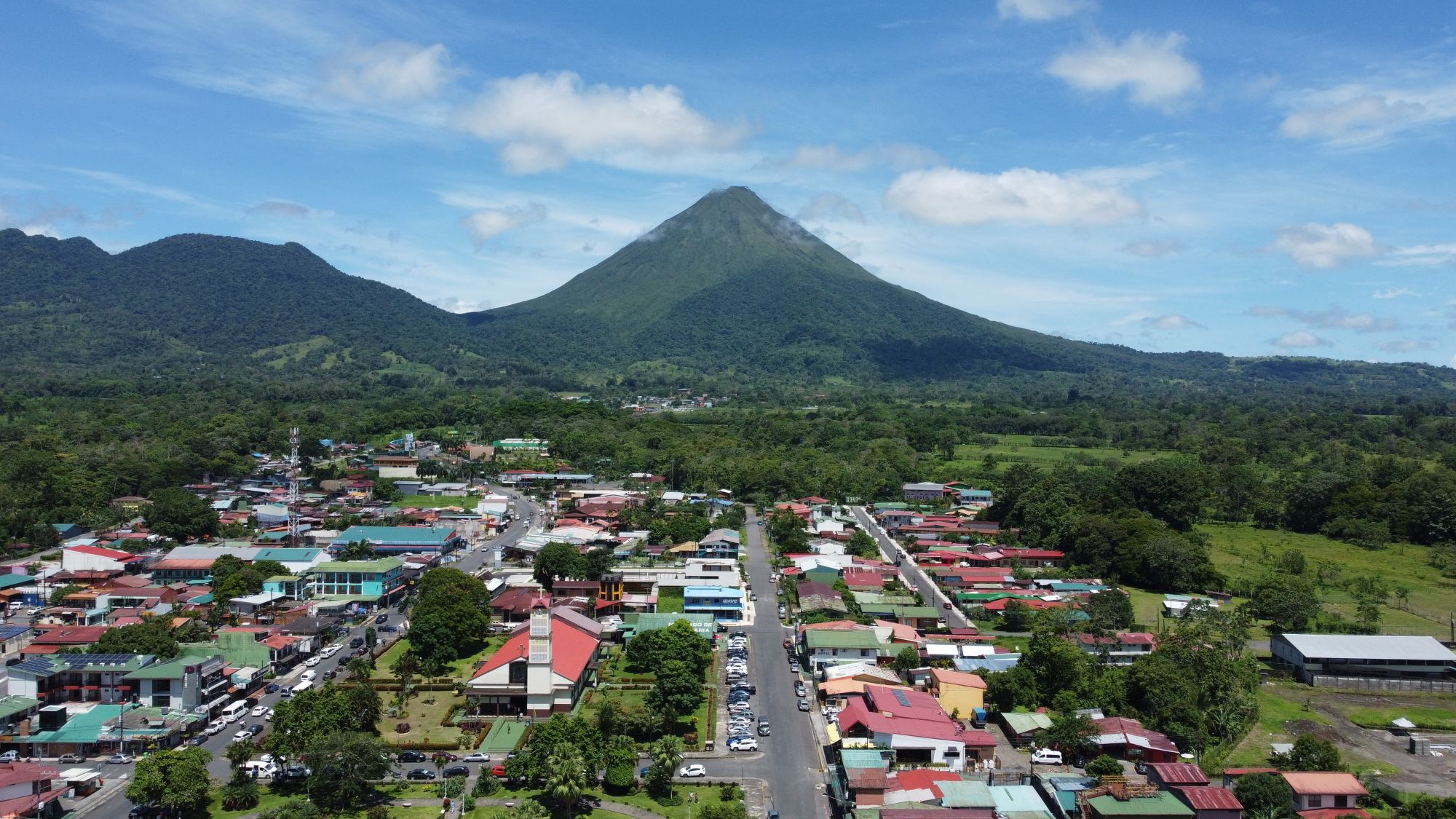
La Fortuna is a town in Costa Rica’s Northern Plains at the foot of Arenal Volcano. Backpackers use it as a base for Arenal Volcano National Park, hot springs, waterfall hikes and adventure tours.
Known for
Adventure, Relaxed
Hostel areas
Town centre, West of town, towards the volcano, South of town, towards the waterfall road
You’ll complete your booking with Hostelworld. We may earn a commission from qualifying bookings.
Best areas to stay in La Fortuna for hostels
01
Town centre
Best for: First-timers and easy tour pick-ups
The few blocks around La Fortuna’s central park and church hold most of the town’s supermarkets, tour agencies, restaurants and bus stops. Staying here means you can walk to dinner and be collected for tours without arranging extra transport. It is compact, so even the busier streets are calm by late evening compared with beach towns.
02
West of town, towards the volcano
Best for: Volcano views and hot-spring access
The main road west of town heads towards Arenal Volcano National Park, the hot springs and Lake Arenal. Accommodation along this stretch tends to have more garden space and clearer views of the volcano. It is less walkable, so check whether the hostel is close to a bus stop or offers transport into the centre before you book.
03
South of town, towards the waterfall road
Best for: Quieter nights and nature close by
The roads climbing south of the centre lead towards the La Fortuna waterfall area and are greener and quieter than the town grid. Places here suit travellers who prefer birdsong to bar noise. Walking back from town can involve hills and unlit stretches, so factor in taxis or a hostel shuttle after dark.
Live rooms and prices
Compare every hostel in La Fortuna
See live dorm beds, private rooms, prices and cancellation terms for your dates on Hostelworld.
You’ll complete your booking with Hostelworld. We may earn a commission from qualifying bookings. You’ll choose your dates and guests there.
Staying in La Fortuna
La Fortuna is a small town in Costa Rica’s Northern Plains, best known as the gateway to Arenal Volcano. The volcano’s near-perfect cone stands about 7 kilometres from town. Arenal is classed as active, though its activity has decreased significantly since 2011. On clear days the summit is visible from the town streets, and many hostels are set up to help guests plan tours around it.
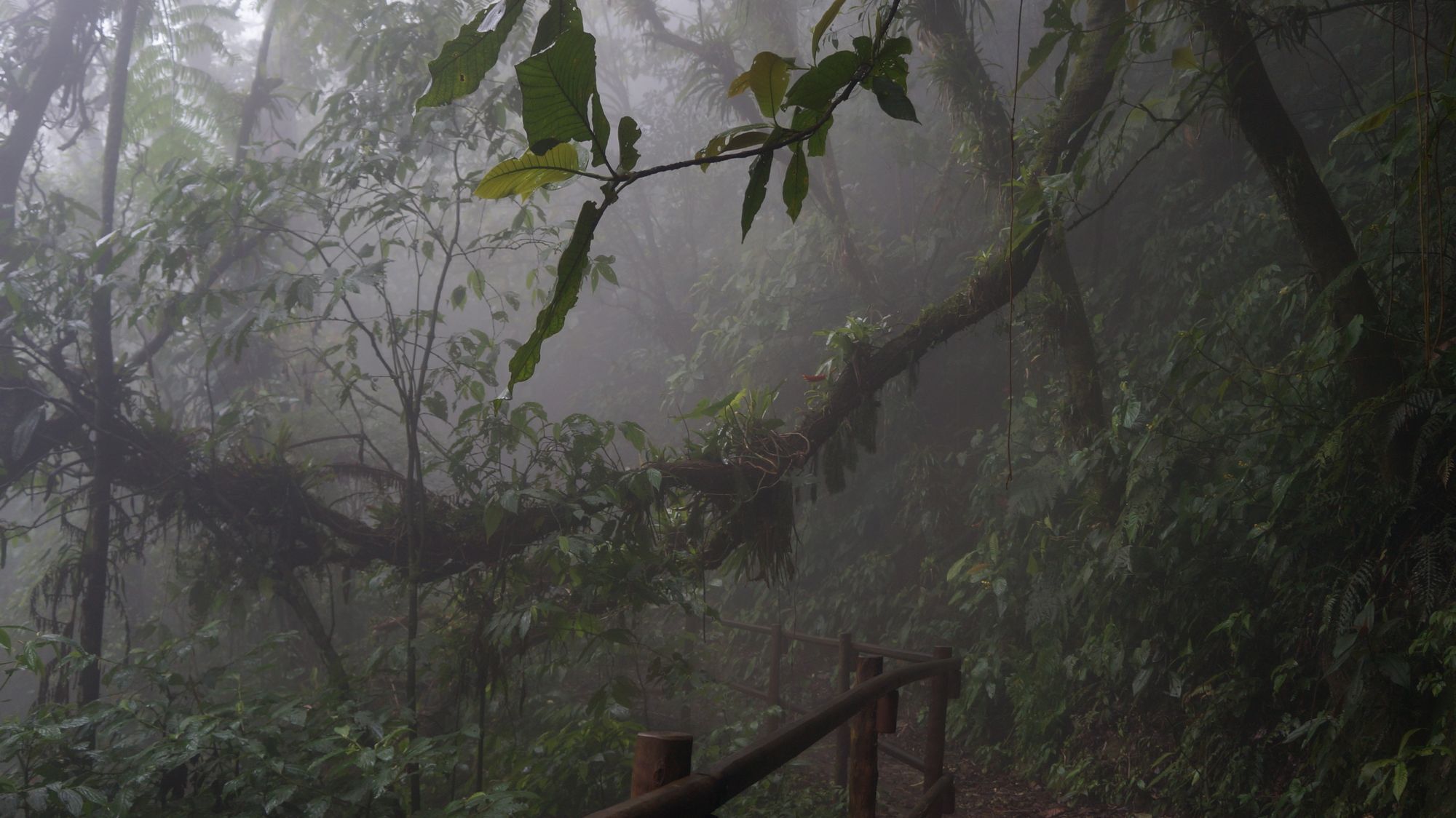
Arenal Volcano National Park lies about 15 kilometres from La Fortuna and has trails through rainforest and old lava flows, including the Heliconias, Coladas, Tucanes and Los Miradores routes. The park is open daily from 8am to 4pm. Beyond the park, the area is known for volcanically heated hot springs, including those along the Tabacón River, and for hikes, hanging bridges and wildlife spotting in the surrounding forests.
For backpackers, La Fortuna combines adventure with easy recovery. Days can be spent on tours and hikes, and evenings in hot springs or the town centre. The Northern Zone is humid and rainy, which keeps the forests green, so pack a rain jacket in every season. Most travellers stay two to four nights, often arriving from San José or the Pacific coast and moving on towards Monteverde, Guanacaste or the Caribbean.
Costa Rica’s tourism board lists Arenal Volcano National Park and La Fortuna as the Northern Plains’ top attraction, with trails across old lava flows.
The area’s volcanically heated hot springs, such as those along the Tabacón River, are a central part of most visits.
Getting to La Fortuna
Most travellers fly into Juan Santamaría International Airport (SJO) near San José, or Daniel Oduber Quirós International Airport (LIR) in Liberia, Guanacaste. From San José, shared tourist shuttles to La Fortuna typically take around three to four hours, and public buses are a slower alternative. From Liberia, shuttles usually take around three hours. A popular alternative from Monteverde is the jeep-boat-jeep transfer across Lake Arenal, which takes roughly three hours. Once in town, tours usually include hostel pick-up.
Best time to visit
Costa Rica’s tourism board places the Northern Plains’ dry season roughly from December to April and its green season from May to November. Even in drier months, La Fortuna sees regular showers, as frequent rain keeps the Northern Zone’s forests wet and evergreen. Mornings usually offer the best chance of clear views of Arenal’s summit. The green season brings fewer visitors and lusher scenery, and hot springs are enjoyable whatever the weather.
Hostel tips for La Fortuna
Rain is common year-round, so look for a hostel with a covered common area and somewhere to dry wet clothes and shoes.
Ask whether the hostel books tours with pick-up included, as the park and hot springs are outside walking distance.
If volcano views matter, check which side of the building the dorms face; Arenal’s summit is often clearest early in the morning.
Staying in the centre saves taxi fares to restaurants and the bus stop; staying west of town brings you closer to the park and springs.
Pack insect repellent and a light rain jacket, and check whether rooms have fans or air conditioning for humid nights.
La Fortuna hostel FAQs
How do I get from San José to La Fortuna?
From San José, most backpackers take a shared tourist shuttle to La Fortuna, which typically takes around three to four hours and can include hotel pick-up. Public buses also run the route and are usually slower, sometimes with a change of bus. Driving yourself is another option. Travellers flying into Juan Santamaría International Airport (SJO) can often book a shuttle directly from the airport area.
How far is La Fortuna from Arenal Volcano?
Arenal Volcano is about 7 kilometres from La Fortuna in a straight line, and its summit can be seen from town on clear days. Arenal Volcano National Park is described by the tourism board as about 15 kilometres from town. The park opens daily from 8am to 4pm and has trails through forest and old lava flows. Most hostels can arrange guided tours with transport included.
How many days do you need in La Fortuna?
Two to four days is typical for La Fortuna. That allows one day for Arenal Volcano National Park, another for hot springs and a waterfall or hanging-bridges walk, and a spare day in case rain or cloud hides the volcano. Travellers adding adventure tours or a trip to nearby Lake Arenal often stay longer before moving on to Monteverde or the coast.
Can you see lava at Arenal Volcano?
Not usually. Arenal is still classed as an active volcano, but its activity has decreased significantly since 2011, so glowing lava flows are no longer a regular sight. What you can see are the remains of older lava flows along the national park’s trails, such as the Coladas route, and the volcano’s distinctive cone, which is often clearest in the early morning.
When is the best time to visit La Fortuna?
The drier months, roughly December to April, generally offer more sunshine and better chances of seeing Arenal’s summit. The green season, from May to November, is quieter with lusher forests, though showers are frequent. La Fortuna has a humid climate and rain can fall in any month, so pack a rain jacket. Hot springs and many tours run year-round, making it a good wet-weather destination.