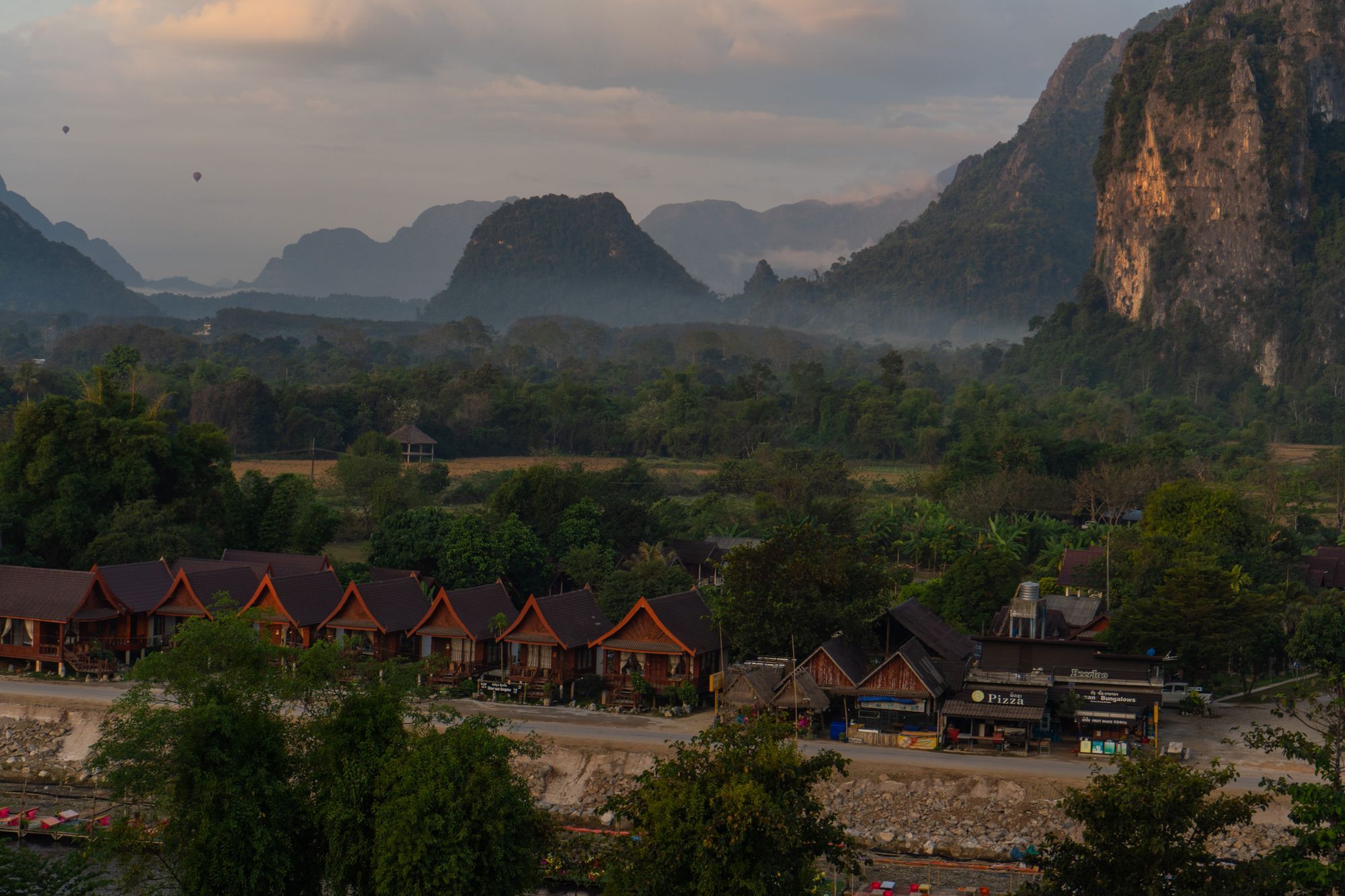
Vang Vieng is a small town on the Nam Song river in central Laos, surrounded by limestone cliffs and caves. Hostels cluster in the town centre, along the river and across the river among the fields.
Known for
Adventure, Social, Party
Hostel areas
Town centre, Nam Song riverside, Across the river (fields and villages)
You’ll complete your booking with Hostelworld. We may earn a commission from qualifying bookings.
Best areas to stay in Vang Vieng for hostels
01
Town centre
Best for: Tours, bars and easy logistics
The main streets near the river have tour desks, restaurants, cafés and bars. Most hostels cater to travellers who arrive for tubing, kayaking and caving. It is the easiest base for a short stay, and bus and tuk-tuk pickups are close by. Expect evening noise on the busiest streets.
02
Nam Song riverside
Best for: River views and sunset decks
Along the river, riverside decks look across to the karst cliffs. Hostels here are well placed for tubing and kayak starts and for watching the sunset. Some are within walking distance of the centre, and others are slightly further out. It suits travellers who want scenery and an easy trip to the water.
03
Across the river (fields and villages)
Best for: Quiet, green surroundings
Crossing the river leads to fields, small villages and trails that run towards the caves and viewpoints. Accommodation is quieter and more spread out. You will usually walk, cycle or take a tuk-tuk to reach the town centre. It suits travellers who prefer rural calm and early starts.
Live rooms and prices
Compare every hostel in Vang Vieng
See live dorm beds, private rooms, prices and cancellation terms for your dates on Hostelworld.
You’ll complete your booking with Hostelworld. We may earn a commission from qualifying bookings. You’ll choose your dates and guests there.
Staying in Vang Vieng
Vang Vieng is a small town about 150 km north of Vientiane, surrounded by rivers and limestone mountains with the Nam Song River running through it. Sheer karst cliffs rise above the town, and a network of caves lies at the base of the mountains. The Lao tourism authority names Tham Chang and Tham Pou Kham among them.
Tubing and kayaking on the Nam Song are the best-known activities, with the river passing steep karst scenery and several caves. The Blue Lagoon, about a 25-minute tuk-tuk ride or 45-minute bicycle ride from town, is a popular swimming spot with very blue, cold water. Hiking, caving and cycling along the river valley fill out the rest of the activity list.
Hostels are concentrated close to the river and the town centre, many with bars, riverside decks and organised trips. Other places sit across the river among fields, quieter at night. Check the FCDO's Laos advice on river and road conditions before you go, and ask your hostel about current river levels. Vang Vieng is easy to combine with Vientiane to the south and Luang Prabang to the north.
Riverside bars in the centre of town give Vang Vieng a long-standing reputation among younger backpackers for evening socialising.
Getting to Vang Vieng
Vang Vieng lies about 150 km north of Vientiane. The Laos-China railway has a station serving the town, though it is outside the centre, so you will need a tuk-tuk or shuttle for the last stretch. Buses and minibuses run from Vientiane and Luang Prabang, but the FCDO notes that roads are often in poor condition, that night driving is especially risky and that journeys can take longer than scheduled. Check the latest timetable locally. Once in town, most people walk, cycle or take tuk-tuks.
Best time to visit
The rainy season runs from May to October, when rivers can rise within hours and flash floods and landslides are common, according to the FCDO. The months from around November to April are generally drier. Nam Song river levels change with the seasons and affect tubing and kayaking, so ask locally before you plan activities. Caves, viewpoints and the Blue Lagoon are all easier to enjoy in drier weather.
Hostel tips for Vang Vieng
Ask your hostel about river conditions and read the FCDO's Laos advice on river travel before you go tubing or kayaking.
Bring a dry bag for your phone and valuables for river days.
If you go cave exploring, use a guide and check whether the cave requires a torch or headlamp.
Stick to main routes and trails in rural areas, since the FCDO warns that unexploded ordnance remains a hazard across Laos.
Check the train and bus timetables for your next stop in advance, since some stations are outside the centre.
Vang Vieng hostel FAQs
Where is Vang Vieng and how far is it from Vientiane?
Vang Vieng is a small town on the Nam Song River in central Laos, about 150 km north of Vientiane according to the Lao tourism authority. It is surrounded by limestone karst cliffs and caves. You can reach it by the Laos-China railway, by bus or by minibus, and onward travel to Luang Prabang is also possible by rail or road.
What is there to do in Vang Vieng?
The Lao tourism authority highlights tubing and kayaking on the Nam Song River, which pass steep karst scenery and several caves. Caves such as Tham Chang and Tham Pou Kham can be visited, and the Blue Lagoon is a popular swimming spot. Cycling and hiking are also common, and many hostels organise group trips.
How far is the Blue Lagoon from Vang Vieng?
The Lao tourism authority says the Blue Lagoon is about a 25-minute tuk-tuk ride or a 45-minute bicycle ride from town. The water is very blue and cold, and visitors can swim or jump from a tree. It is a popular stop, so go early or on a weekday if you prefer fewer people.
Is Vang Vieng good for backpackers?
Vang Vieng is popular with backpackers because it is compact, has a social hostel scene and offers plenty of outdoor activities, from tubing and kayaking to caves and viewpoints. River levels, road conditions and unexploded ordnance are real considerations in Laos, so read the FCDO's travel advice, ask locally about conditions and use reputable operators.
When is the best time to visit Vang Vieng?
The rainy season runs from May to October, when rivers can rise quickly and flash floods and landslides are common, as the FCDO notes. The drier months, from around November to April, are generally easier for river and cave activities. River levels change through the year, so check with your hostel before booking tubing or kayaking.