Yogyakarta is a cultural city in central Java, home to a sultan's palace and the base for Borobudur and Prambanan. Hostels cluster around Malioboro and Tugu station, the Kraton area and Prawirotaman.
Known for
Social, Relaxed
Hostel areas
Malioboro and Tugu station, Keraton and Taman Sari, Prawirotaman
You’ll complete your booking with Hostelworld. We may earn a commission from qualifying bookings.
Best areas to stay in Yogyakarta for hostels
01
Malioboro and Tugu station
Best for: First visits, shopping and transport links
Malioboro is the central shopping street, lined with souvenir stalls, food and street performers, and Tugu railway station is at its northern end. Many hostels sit on the lanes around here, within reach of the Keraton and Trans Jogja bus stops. It is busy and noisy during the day, so lanes set back from the main street are quieter.
02
Keraton and Taman Sari
Best for: Palace, culture and walking
South of Malioboro, the area around the Sultan's palace has narrow lanes, craft workshops, batik sellers and small guesthouses. It is quieter than Malioboro and well suited to walking, becak rides and exploring on foot. Hostels here suit travellers who want an old-city atmosphere over nightlife.
03
Prawirotaman
Best for: Cafés, restaurants and a relaxed base
A district south of the palace known for its cafés, restaurants and a mix of hostels and guesthouses along the main street and side lanes. It feels calmer than central Malioboro but is well connected by ride-hail and bus. It is a popular choice for travellers staying several nights.
Live rooms and prices
Compare every hostel in Yogyakarta
See live dorm beds, private rooms, prices and cancellation terms for your dates on Hostelworld.
You’ll complete your booking with Hostelworld. We may earn a commission from qualifying bookings. You’ll choose your dates and guests there.
Staying in Yogyakarta
Yogyakarta, often called Jogja, is a city in central Java known for its Javanese court culture, arts and food. Indonesia's official tourism site describes the Keraton, the Sultan's palace, as a living museum, and Malioboro as a street of shops and street performers. The city has long been a student and arts hub, which gives it a lively, informal feel.
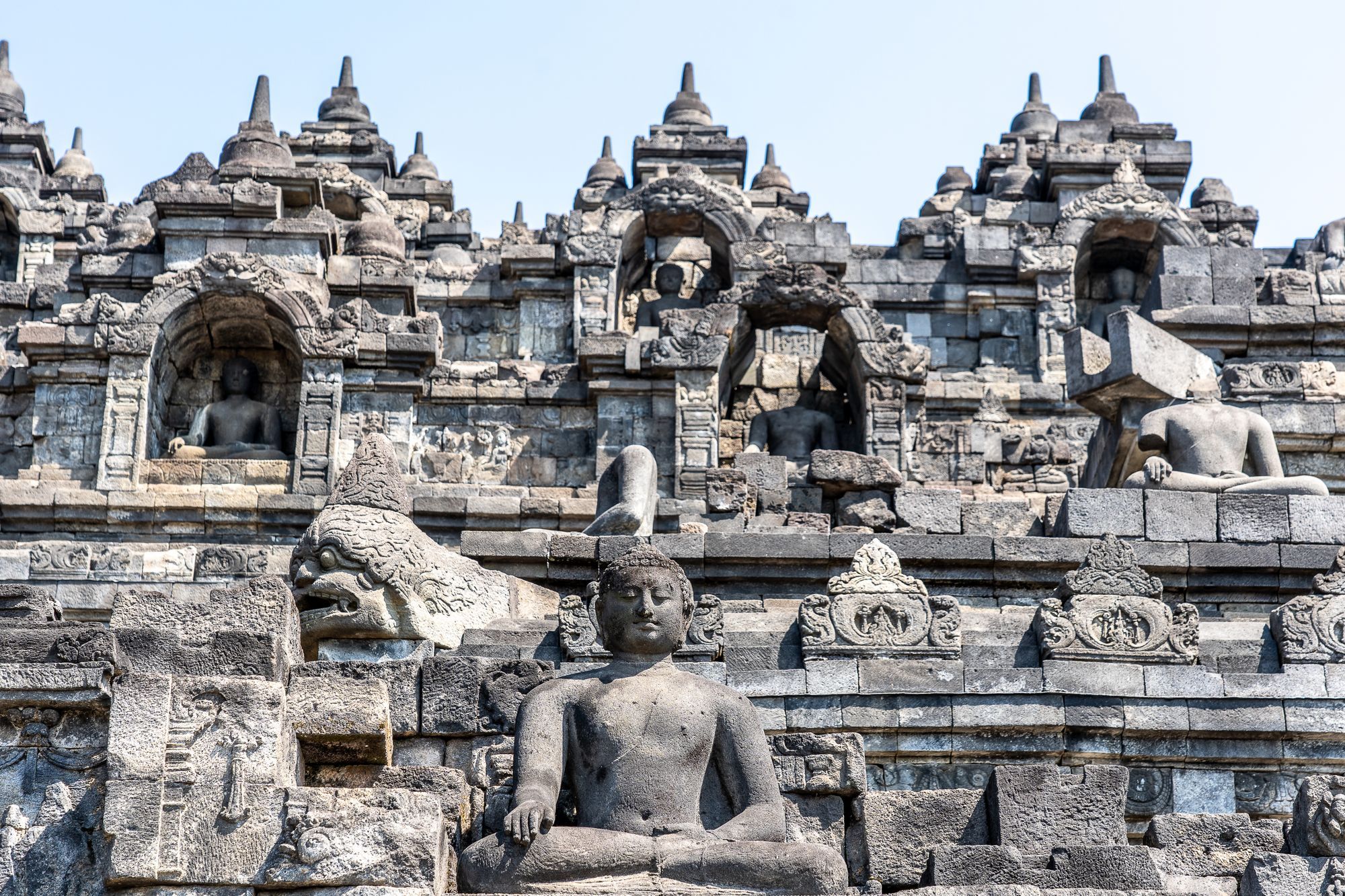
Two major temple complexes lie within day-trip distance. Borobudur, a UNESCO World Heritage Site in Magelang Regency, is about 1.5 hours away by road, and many visitors go for sunrise. Prambanan, a Hindu temple complex with reliefs of the Ramayana, is about 17 km east of the city centre and reachable by city bus or ride-hail.
Hostels in Jogja are generally social and well placed for walking, with many concentrated near Malioboro and Tugu station and in the Prawirotaman area. Getting around can be done on foot, by becak (pedal-powered cart), Trans Jogja bus or ride-hail app. Many travellers use Yogyakarta as a stop between Bali and Jakarta, or on an overland route across Java.
Hostels near Malioboro and Tugu station put travellers within walking distance of the main sights and cafés, which makes it easy to meet others for temple trips.
Indonesia's official tourism site describes the Keraton as a living museum, and slow-paced options such as becak rides, andong carts and cycling are common.
Getting to Yogyakarta
Yogyakarta International Airport (YIA) is far from the city, in Kulon Progo, and the trip to the centre typically takes around 1.5 to 2 hours by DAMRI shuttle or the airport train to Tugu or Lempuyangan station, according to Indonesia's official tourism site. Taxis and ride-hail cars are also available. Trains link Yogyakarta with other Java cities, and Tugu station is the main stop for most travellers. Borobudur is roughly 1.5 hours away by road, and Prambanan is about 17 km east of the centre.
Best time to visit
Yogyakarta follows Java's tropical pattern, with a dry season commonly cited as running from around April to October and a wetter season from roughly November to March. Dry months are better for temple visits and sunrise trips, but they are also busier, and Borobudur can be crowded around holidays. Rain in the wet season is often heavy but short, and the countryside is greener. Check local conditions and temple opening rules before you go.
Hostel tips for Yogyakarta
Stay near Malioboro or Tugu station if you rely on trains, and near Prawirotaman if you prefer cafés and quieter evenings.
Ask whether the hostel arranges sunrise trips to Borobudur or can help with transport, as the temple is roughly 1.5 hours away.
Agree on prices before riding a becak or andong, and consider ride-hail or Trans Jogja for longer trips.
Check the airport transfer plan in advance, as Yogyakarta International Airport is far from the city.
Dress modestly for the Keraton and temples, and ask the hostel whether sarongs are provided.
Yogyakarta hostel FAQs
Where should I stay in Yogyakarta for hostels?
Most backpackers choose between three areas. Malioboro and Tugu station are central, busy and handy for trains and buses. The Keraton and Taman Sari area is quieter and good for walking among craft lanes. Prawirotaman has many cafés and restaurants and a calmer feel. If you only have a night or two, a place near Tugu or Malioboro is the simplest base.
How do I get from Yogyakarta airport to the city?
Yogyakarta International Airport (YIA) is in Kulon Progo, quite far from the city. Indonesia's official tourism site says the trip into the centre typically takes about 1.5 to 2 hours by DAMRI shuttle or the airport train to Tugu or Lempuyangan station. Taxis and ride-hail cars are also an option, and allow extra time for traffic.
How far is Borobudur from Yogyakarta?
Borobudur is in Magelang Regency, Central Java, and typically takes around 1.5 hours to reach from Yogyakarta by road, according to Indonesia's official tourism site. It is a UNESCO World Heritage Site, and many visitors go for sunrise, which means an early start. Hostels often help arrange transport, or you can use a ride-hail car or a hired driver.
How do I get from Yogyakarta to Prambanan?
Prambanan is about 17 km east of central Yogyakarta, on the border with Klaten in Central Java. Indonesia's official tourism site says a ride-hail car or motorbike taxi typically takes around 30 to 40 minutes, and the Trans Jogja bus (routes 1A or 1B) takes roughly 45 minutes to an hour, stopping in front of the complex.
How many days do backpackers spend in Yogyakarta?
Many travellers spend two to four days. That is enough for the Keraton, Malioboro, a sunrise or day trip to Borobudur and a visit to Prambanan, with time left for food and craft districts. Longer stays suit people who want to take batik or cooking classes or explore the surrounding countryside and Solo, which is a day trip away.