Ubud is a town in the hills of central Bali, Indonesia, known for rice terraces, temples, art museums and yoga. Hostels cluster in central Ubud around Monkey Forest Road and Jalan Hanoman, in Penestanan and in Nyuh Kuning.
Known for
Relaxed, Work-friendly
Hostel areas
Central Ubud (Ubud Palace and market), Monkey Forest Road and Jalan Hanoman, Penestanan, Nyuh Kuning
You’ll complete your booking with Hostelworld. We may earn a commission from qualifying bookings.
Best areas to stay in Ubud for hostels
01
Central Ubud (Ubud Palace and market)
Best for: First visits and walking to the sights
The area around Ubud Palace and Ubud Market is the busiest part of town, with cafés, galleries, dance performances in the evenings and easy access to the main roads. Hostels here put you within walking distance of most sights and restaurants. It can be congested with traffic during the day, but it is the most convenient base for a short stay.
02
Monkey Forest Road and Jalan Hanoman
Best for: Cafés, yoga and budget stays
These two parallel roads run south from the centre towards the Sacred Monkey Forest Sanctuary and are lined with cafés, spas, shops and yoga studios. Many hostels and guesthouses sit down the side lanes, which tend to be quieter than the main roads. It is a practical, walkable area that combines convenience with a slightly calmer feel.
03
Penestanan
Best for: Rice-field views and a quieter village feel
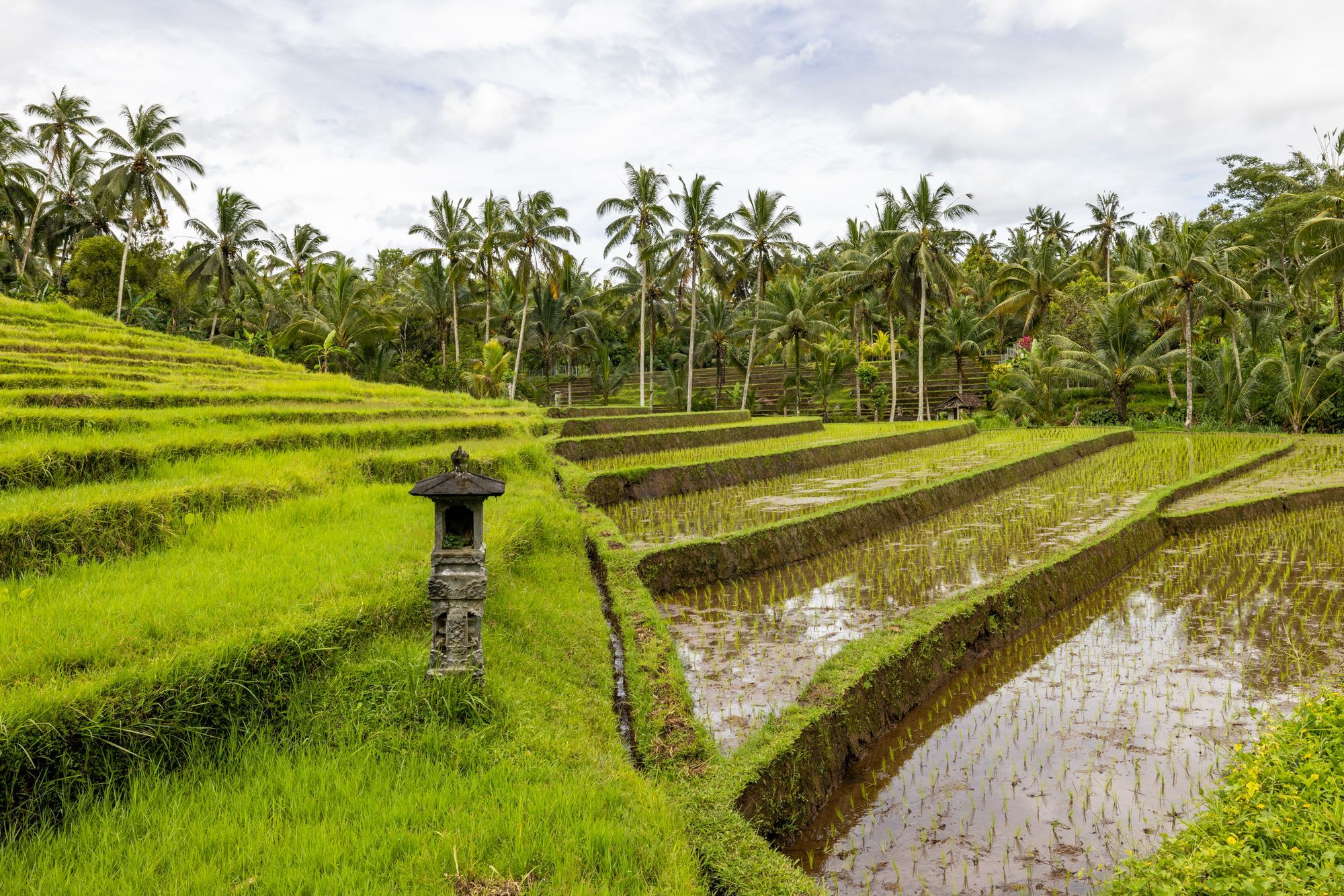
West of the Campuhan ridge, Penestanan is a village known for its artists, rice paddies and small yoga studios. Many places are reached by footpaths and steps rather than roads, which keeps it quiet. Hostels and guesthouses here suit travellers who want greenery and calm, while central Ubud remains a short walk or ride away.
04
Nyuh Kuning
Best for: A calm village base near the Monkey Forest
Just south of the Sacred Monkey Forest Sanctuary, Nyuh Kuning is a traditional village with quieter lanes, homestays and woodcarving workshops. It feels more residential than central Ubud but is within walking distance of Monkey Forest Road. It suits travellers who want to sleep somewhere peaceful and still reach cafés and yoga studios easily.
Live rooms and prices
Compare every hostel in Ubud
See live dorm beds, private rooms, prices and cancellation terms for your dates on Hostelworld.
You’ll complete your booking with Hostelworld. We may earn a commission from qualifying bookings. You’ll choose your dates and guests there.
Staying in Ubud
Ubud sits in the green hills of central Bali, and its name is linked to the Balinese word for medicine, a nod to the herbs and plants that grow here. It is the island's cultural centre, with a royal palace, traditional dance performances, art museums and craft villages. Rice paddies run right up to the edge of town, and the Tegallalang terraces are a short ride north.
Days in Ubud often start with a yoga class or a walk through the rice fields before the heat builds. The Sacred Monkey Forest Sanctuary, home to hundreds of long-tailed macaques and a temple complex, is in the middle of town. Museums such as ARMA and Museum Puri Lukisan showcase Balinese painting, and Ubud Market is a good place to browse handicrafts.
Hostels in Ubud tend to be calmer than on the coast, often set in gardens or overlooking rice fields, with pools and communal breakfasts. The town is small but hilly, so walking is possible in the centre, and many visitors rent bicycles or scooters for outlying villages. White-water rafting on the Ayung River and sunrise treks are popular day trips.
Indonesia's official tourism site promotes Ubud as a quiet base for remote workers and digital nomads.
Getting to Ubud
The nearest airport is I Gusti Ngurah Rai International Airport (DPS) in south Bali. The drive to Ubud typically takes around one to two hours depending on traffic. Most travellers use an airport taxi, a ride-hail car booked through an app or a hostel pickup; tourist shuttle buses also link Ubud with Kuta, Sanur and other areas. Canggu is typically one to two hours away by road. In town, people walk, cycle or use scooters and ride-hail motorbikes, as Ubud is small but hilly.
Best time to visit
Bali's dry season, roughly April to October, brings sunnier days, cooler evenings in the hills and the busiest period for hostels, especially in July and August. The wet season, roughly November to March, has heavier rain and high humidity, but the rice fields are especially green and the town is quieter. The airport closes for 24 hours on Nyepi, the Balinese Day of Silence, usually in March.
Hostel tips for Ubud
Check how far the hostel is from central Ubud on foot, as roads are hilly and pavements can be narrow.
If you want rice-field views and quiet, look at Penestanan or Nyuh Kuning; for convenience, stay near Monkey Forest Road or Jalan Hanoman.
Ask whether yoga classes, breakfast or bicycle hire are included, as many Ubud hostels offer them.
Keep belongings secure when visiting the Monkey Forest: the macaques grab bags, sunglasses and food.
Bring a sarong or check whether your hostel lends one, as it is expected when visiting Balinese temples.
Ubud hostel FAQs
Where is Ubud in Bali?
Ubud is a town in the hills of central Bali, Indonesia, inland from the southern beach areas. It is typically one to two hours by road from I Gusti Ngurah Rai International Airport, depending on traffic. It is known as Bali's cultural heartland, with a royal palace, art museums, traditional dance, the Sacred Monkey Forest Sanctuary and nearby rice terraces such as Tegallalang.
Where should I stay in Ubud for hostels?
Central Ubud, around Ubud Palace and the market, is the most convenient area for walking to sights and restaurants. Monkey Forest Road and Jalan Hanoman offer cafés, yoga studios and many guesthouses down quieter side lanes. Penestanan, west of the Campuhan ridge, suits travellers who want rice-field views and calm. Nyuh Kuning, south of the Monkey Forest, is a peaceful village base.
How do I get from Bali airport to Ubud?
From I Gusti Ngurah Rai International Airport (DPS), most travellers take an airport taxi, book a ride-hail car through an app or arrange a pickup through their hostel. The drive typically takes around one to two hours, depending on traffic through south Bali. Tourist shuttle buses also connect Ubud with Kuta, Sanur and other areas, which can work well if you are not in a hurry.
Is Ubud good for digital nomads?
Ubud is a well-known base for remote workers who prefer a calm setting. Indonesia's official tourism site promotes it as a quiet place for remote workers and digital nomads, and there are co-working spaces and laptop-friendly cafés around town. Wi-Fi quality varies between properties, so ask your hostel about speeds and desk space if you need to make video calls.
How many days should I spend in Ubud?
Many backpackers spend three to five days in Ubud. That allows time for the Sacred Monkey Forest Sanctuary, a walk on the Campuhan ridge, the Tegallalang rice terraces, a temple visit, a traditional dance performance and perhaps a yoga class or cooking course. Longer stays suit travellers who want to join yoga retreats, take a sunrise volcano trek or work remotely.